
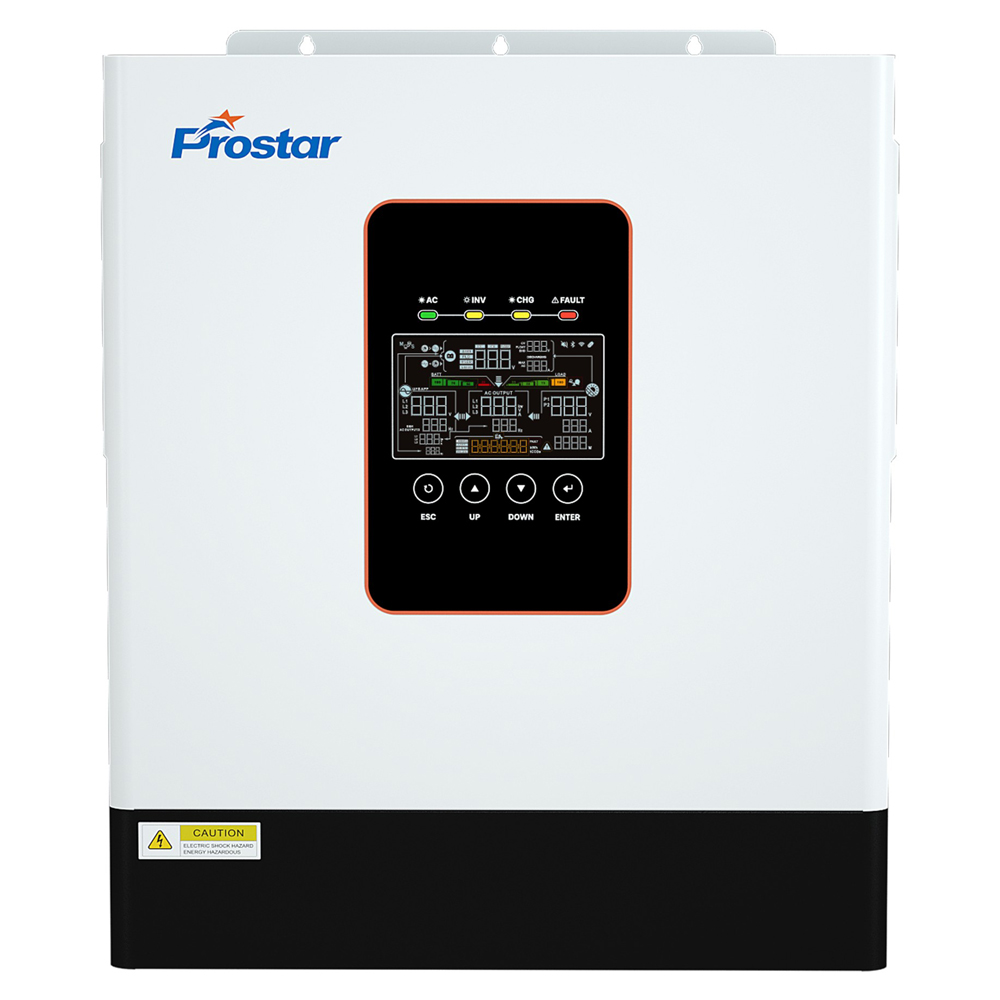
Prostar PIE12K-48L 12kw hybrid inverter 48v with dual mppt solar charger is up to 15,000W PV input capacity, and dual PV string inputs. It supports grid-connected operation, battery-free operation, lead-acid and lithium batteries, and 160A maximum charging current. Its 24kVA surge capacity and pure sine wave output make it suitable for residential and small commercial solar systems.
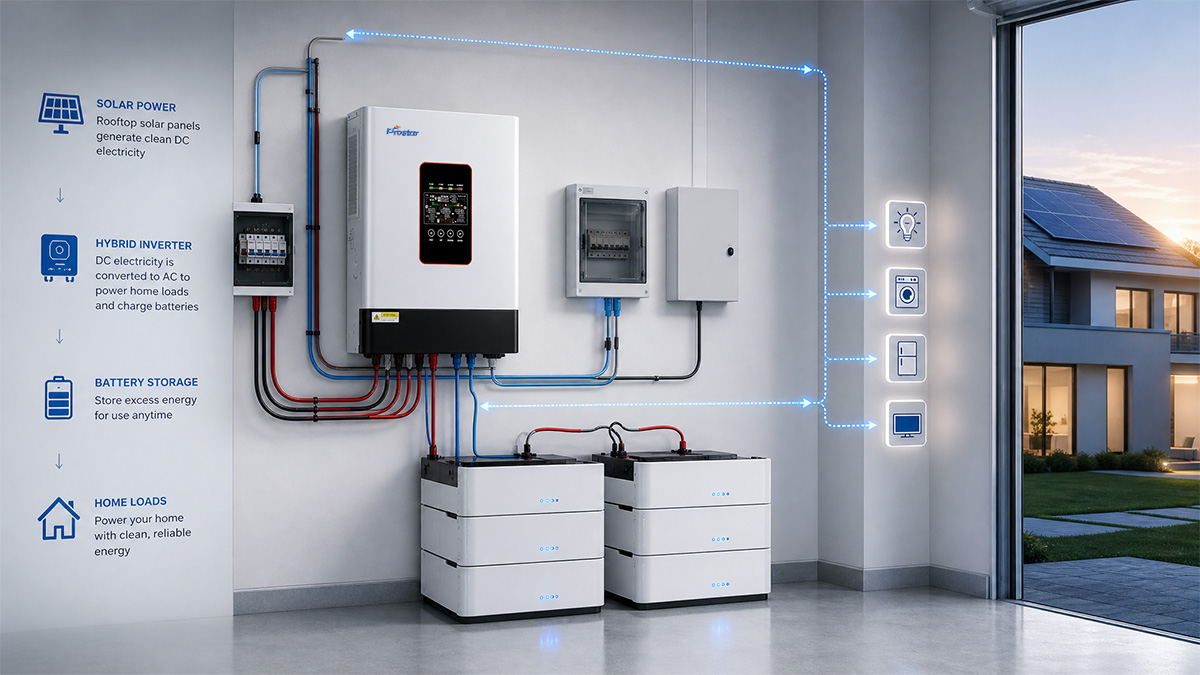
The PIE12K-48L is a high-capacity single-phase hybrid solar inverter designed to integrate photovoltaic generation, battery storage, utility power, and compatible generator input.
With a rated output of 12kVA/12kW, this 12kW hybrid inverter provides AC power for residential and small commercial applications.
Its maximum PV array input reaches 15,000W, configured as 7,500W + 7,500W. This allows installers to connect a substantial solar array to support daytime electricity consumption and battery charging.
When energy storage is required, the inverter supports 48V lead-acid, lithium-ion, and user-defined battery configurations.
Key Features and Benefits of 12kW Hybrid Inverter
The PIE12K-48L combines high solar input capacity, flexible battery integration, and multiple power supply modes.
The following features explain how its technical specifications translate into practical benefits for installers, distributors, and end users.
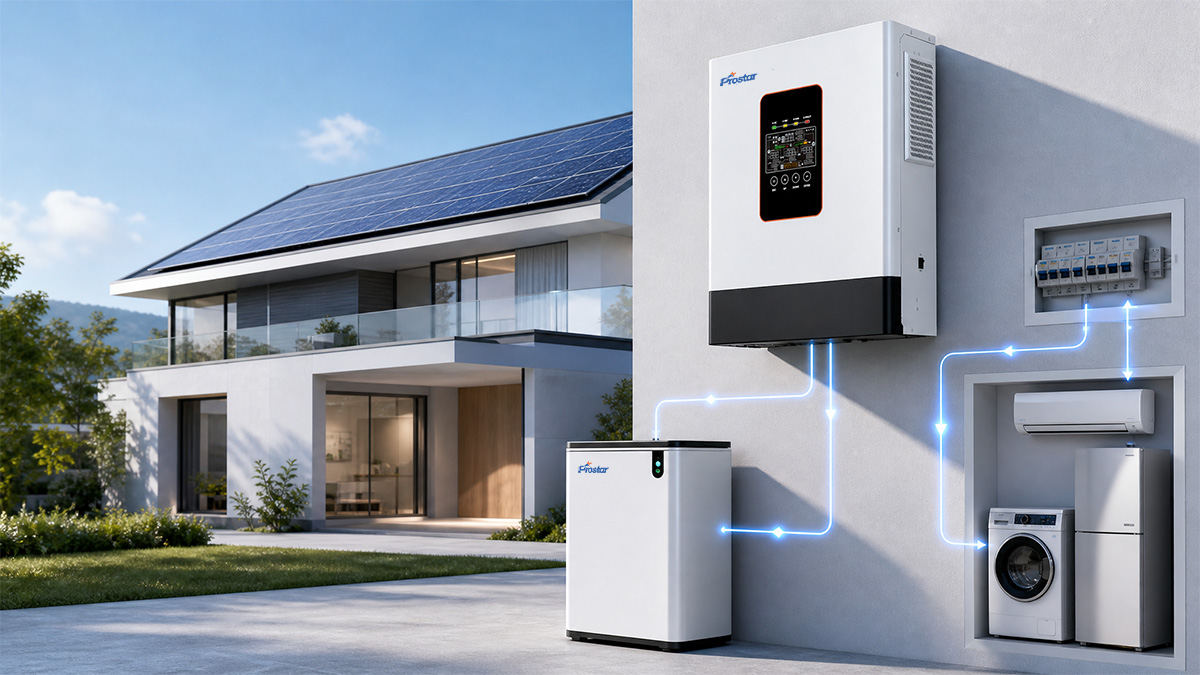

12kW Rated Output with 24kVA Surge Capacity
The inverter delivers 12kVA/12kW rated output power and supports up to 24kVA surge power.
Its overload capacity includes:
- 102%–125% load for 1 minute.
- 125%–200% load for 10 seconds.
The 12kW output provides sufficient capacity for multiple electrical loads operating simultaneously.
The additional surge capability accommodates certain temporary increases in power demand, including motor starting and appliance startup currents, provided the load characteristics remain within the inverter’s specified limits.
Users can operate a wider range of residential and small commercial equipment without selecting multiple smaller inverters.
For example, compatible loads may include:
- Air conditioners.
- Refrigerators and freezers.
- Water pumps.
- Washing machines.
- Lighting systems.
- Computers and office equipment.
For motor-driven equipment, installers should check starting current, power factor, and surge duration before finalizing the system design.
15kW Maximum Solar PV Input with Dual PV String Inputs
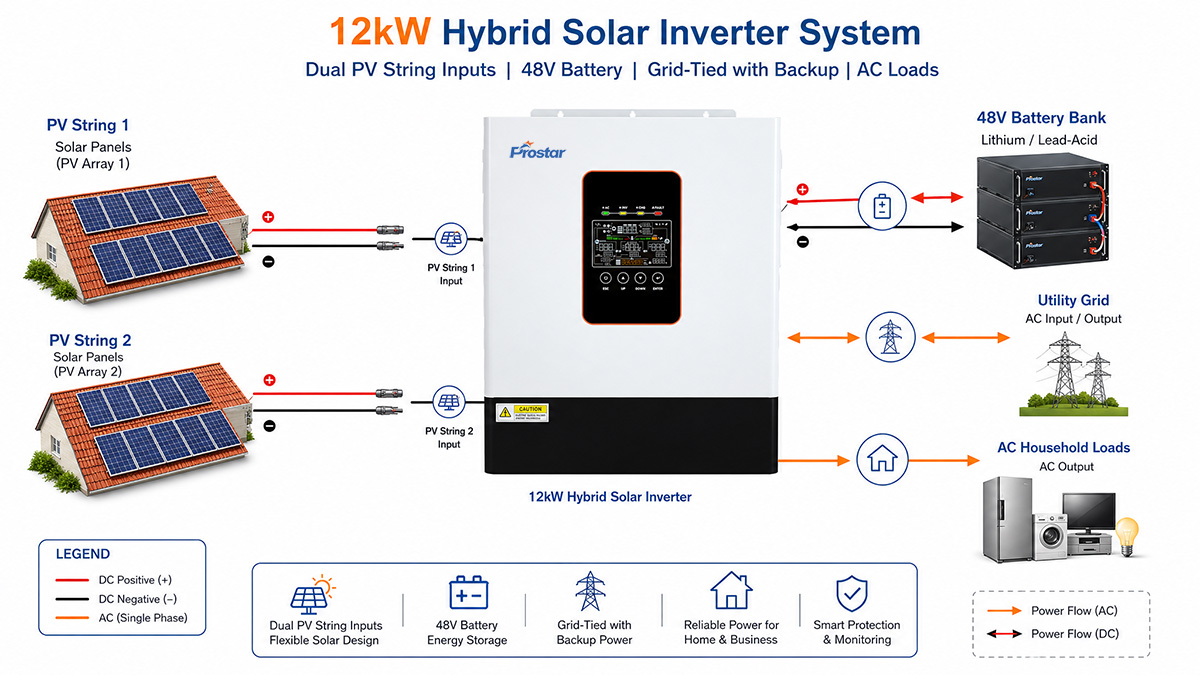
The inverter supports up to 15,000W of PV array power, with two specified input sections:
- PV Input 1: 7,500W, maximum 27A.
- PV Input 2: 7,500W, maximum 27A.
The maximum PV open-circuit voltage is 500VDC.
The high PV input capacity allows the installed solar array to exceed the inverter’s nominal AC output rating.
This provides greater flexibility in solar array sizing and energy generation planning.
Users can install more solar panels to increase daytime energy production and improve the potential for battery charging.
This is particularly useful in locations where solar irradiance varies throughout the day or where customers want to maximize available rooftop space.
The dual PV input arrangement also provides flexibility when organizing solar strings.
Battery-Free Operation Reduces Initial Investment
The PIE12K-48L supports battery-free operation. It can supply loads directly through PV or utility power without requiring a battery bank.
Customers do not need to purchase batteries when initially installing the solar system.
The inverter can be deployed without the additional cost and maintenance requirements associated with battery storage.
This makes the 12kW hybrid inverter a practical option for customers whose primary objective is reducing daytime electricity consumption rather than obtaining battery backup.
Customers can also plan battery installation as a later investment, subject to the system’s operating requirements.
How does battery-free operation work?
A typical operating concept is:
- Solar panels generate DC electricity.
- The inverter converts available solar energy into AC power for connected loads.
- Utility power can supplement the available supply when required.
- A battery bank is not necessary for the specified battery-free operating mode.
Battery-free operation should not be confused with battery-free backup during a utility outage. Confirm the supported operating mode and PV-only operation conditions before designing an off-grid application.
48V Battery Compatibility for Flexible Energy Storage
The inverter uses a 48VDC nominal battery system and supports:
- Lead-acid batteries.
- Lithium-ion batteries.
- User-defined battery configurations.
Specified battery charging parameters include:
| Parameter | Specification |
|---|---|
| Nominal Battery Voltage | 48VDC |
| Floating Charge Voltage | 54VDC |
| Overcharge Protection | 61VDC |
| Maximum PV Charging Current | 160A |
| Maximum AC Charging Current | 160A |
| Maximum Hybrid Charging Current | 160A |
The 48V battery architecture allows customers to select compatible storage solutions according to their energy requirements and investment budget.
Different charging algorithms are available:
- Two-stage charging: CC/Float.
- Three-stage charging: CC/CV/Float.
- Configurable PV charging.
The system can be configured for different storage applications.
For example, a residential customer can initially install a lead-acid battery bank and later evaluate a compatible lithium battery solution.
For lithium batteries, verify BMS communication compatibility, charging voltage limits, discharge current, and battery protection settings before commissioning.
The 160A figure is a maximum specified charging current. The actual charging current depends on the selected operating mode, available input power, battery configuration, and system settings.
Grid-Tied Function for Solar Energy Utilization
The inverter supports grid-connected operation and accepts four nominal AC input voltages:
208V, 220V, 230V, and 240V.
Its maximum specified input power factor is ≥0.99.
The grid-connected function allows solar generation to work alongside the utility supply.
When solar generation is insufficient, the utility can provide additional power according to the selected operating configuration.

Users can reduce their dependence on utility electricity during periods of solar production.
The system is suitable for residential and small commercial applications where solar energy is used to offset grid electricity consumption.
Whether surplus electricity can be exported to the grid depends on the inverter’s supported export function, configuration, and local utility approval. Grid connection alone does not establish export capability.
Intelligent Monitoring and Communication Interfaces
The inverter provides multiple monitoring and communication options:
| Interface | Function |
|---|---|
| 4.8-inch LCD | Operating information and parameter settings |
| LED Indicators | Equipment status indication |
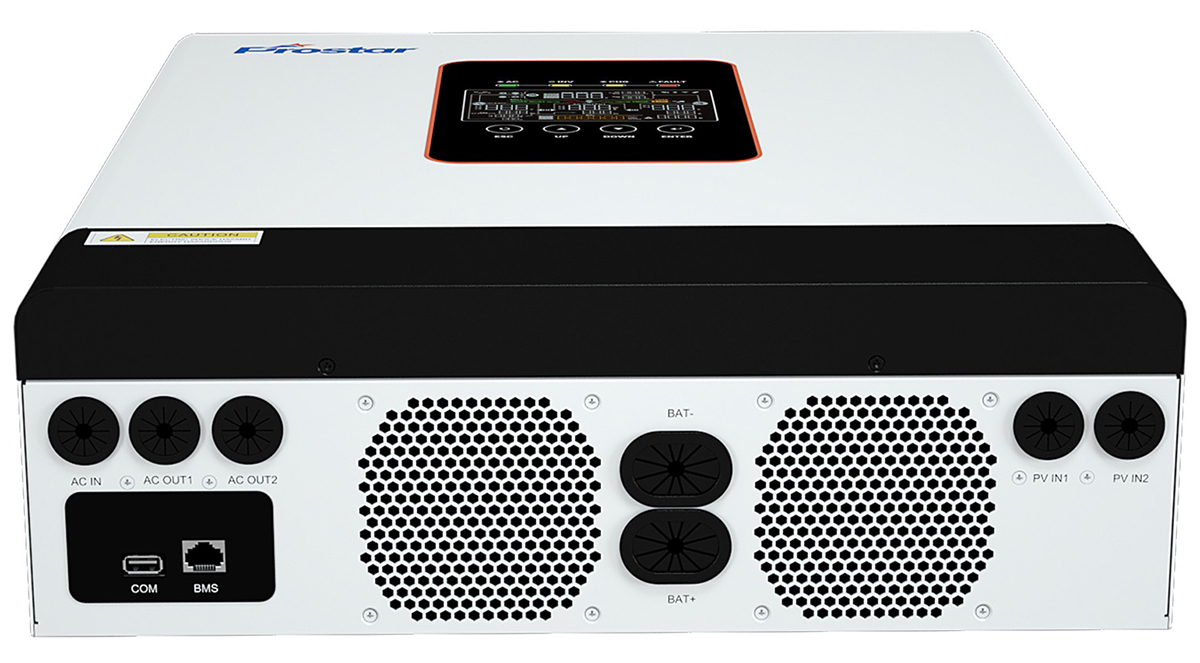
| USB (COM) | Communication and configuration |
| RS485 (BMS) | Compatible battery communication |
| CT Sensor / Meter | Optional external measurement |
| Wi-Fi | Optional remote monitoring |
| GPRS | Optional remote monitoring |
| Ethernet | Optional network monitoring |
The communication interfaces allow the inverter to integrate with compatible battery management systems and external monitoring solutions.
Installers can simplify system configuration and monitoring.
End users can also obtain operating information remotely when the corresponding monitoring module and platform are installed.
Technical Specification
The following tables summarize the electrical and environmental parameters for system designers and purchasing engineers.
PV Input Specifications
| Parameter | Value |
|---|---|
| Maximum PV Array Power | 7,500W + 7,500W |
| Maximum PV Input Current | 27A + 27A |
| Maximum PV Open Circuit Voltage | 500VDC |
| MPPT Operating Voltage Range | 60–450VDC |
| Maximum PV Charging Current | 160A |
| Number of MPPT Trackers | 1 |
| Strings per MPPT | 2 |
Grid and AC Output Specifications
| Parameter | Value |
|---|---|
| Nominal Input Voltage | 208/220/230/240VAC |
| UPS Input Voltage Range | 170–264VAC |
| APL/GEN Input Voltage Range | 90–280VAC |
| Nominal Frequency | 50Hz / 60Hz |
| Frequency Range | 40–70Hz |
| Input Power Factor | ≥0.99 |
| Nominal Output Voltage | 208/220/230/240VAC ±5% |
| Output Frequency in Grid Mode | Synchronized to Grid |
| Output Frequency in Battery Mode | 50Hz / 60Hz ±0.1% |
| Rated Output Power | 12kVA / 12kW |
| Surge Power | 24kVA |
| Output THD | ≤3% (Linear Load) |
| Waveform | Pure Sine Wave |
| Maximum DC-AC Efficiency | 94% |
| Transfer Time | 10ms / 20ms |
Battery and Charging Specifications
| Parameter | Value |
|---|---|
| Battery Types | Lead-acid / Lithium-ion / User-defined |
| Nominal Battery Voltage | 48VDC |
| Floating Charge Voltage | 54VDC |
| Overcharge Protection | 61VDC |
| Maximum PV Charging Current | 160A |
| Maximum AC Charging Current | 160A |
| Maximum Hybrid Charging Current | 160A |
| Charging Algorithms | CC/Float, CC/CV/Float, PV Charging |
Environmental and Mechanical Specifications
| Parameter | Value |
|---|---|
| Installation | Wall-mounted |
| Dimensions | 410 × 336 × 125mm |
| Net Weight | 8.5kg |
| Operating Temperature | -10°C to 60°C |
| Storage Temperature | -15°C to 60°C |
| Relative Humidity | 5%–95%, non-condensing |
| Noise Level | <45dB at 1 meter |
| Cooling | Intelligent Fan Cooling |
| IP Rating | IP21 |
Recommended Applications
The 12kW hybrid inverter is designed for applications requiring relatively high single-phase output power and flexible solar energy management.
Residential Solar Power Systems
The inverter can support residential loads such as:
- Air conditioning systems.
- Refrigerators and freezers.
- Washing machines.
- Water pumps.
- Lighting.
- Computers and entertainment equipment.
Its 12kW rated output makes it suitable for larger residential solar installations, subject to load assessment.
Small Commercial Solar Installations
Suitable applications include:
- Retail stores.
- Small supermarkets.
- Offices.
- Restaurants.
- Workshops.
- Small service facilities.
The 15kW maximum PV input allows system designers to install a substantial solar array for daytime electricity consumption.
Hybrid Solar Systems with Generator Input
In locations with unstable utility electricity, the inverter can work with compatible generators as an auxiliary AC source.
Its APL/GEN input voltage range of 90–280VAC provides flexibility for generator integration.
This configuration can be considered for remote facilities, rural buildings, and commercial sites with backup generators.
Solar Systems with Future Battery Expansion
Customers who want to control their initial investment can start with a battery-free configuration, where supported by the operating conditions.
A compatible 48V battery bank can be added later.
This allows the system to evolve from daytime solar self-consumption toward a solar-plus-storage configuration.
International Standards and Installation Considerations
For international solar projects, product selection should consider applicable electrical safety requirements, grid interconnection regulations, and installation standards.
Relevant international references include:
| Standard | Technical Scope |
|---|---|
| IEC 62109-1 | General safety requirements for power conversion equipment used in PV systems |
| IEC 62109-2 | Particular safety requirements for photovoltaic inverters |
| IEC 62116 | Testing procedures for islanding prevention measures in grid-connected PV inverters |
| IEC 61727 | Utility interface characteristics for photovoltaic systems |
| IEC 60364-7-712 | Electrical installation requirements for photovoltaic power supply systems |
These standards provide technical reference points for inverter evaluation and system installation.
Their applicability depends on the destination market and project requirements.
The standards listed above should not be interpreted as confirmation that the PIE12K-48L holds certification to every listed standard. Buyers should request the actual model-specific test reports, certificates, and declarations of conformity from the manufacturer.
Additional installation considerations include:
- Correct AC and DC cable sizing.
- Proper protective earthing.
- Suitable DC isolators and overcurrent protection.
- Battery-side circuit protection.
- Adequate ventilation and installation clearance.
- Compliance with local utility interconnection requirements.
The inverter has an IP21 enclosure rating. It should be installed in a protected indoor environment.
Frequently Asked Questions (FAQ)
The Articles You may Like
- What is the CT Sensor in Solar Inverter On Off Grid
- Hybrid Solar Inverters Provide Off-grid Power Availability
- Which Transformer is Good for Home Solar Inverter
- Can Off Grid Solar Inverter Charge Controller Run without Battery
- How to Use Off Grid Solar Inverter Without Battery
- Hybrid power – wikipedia