
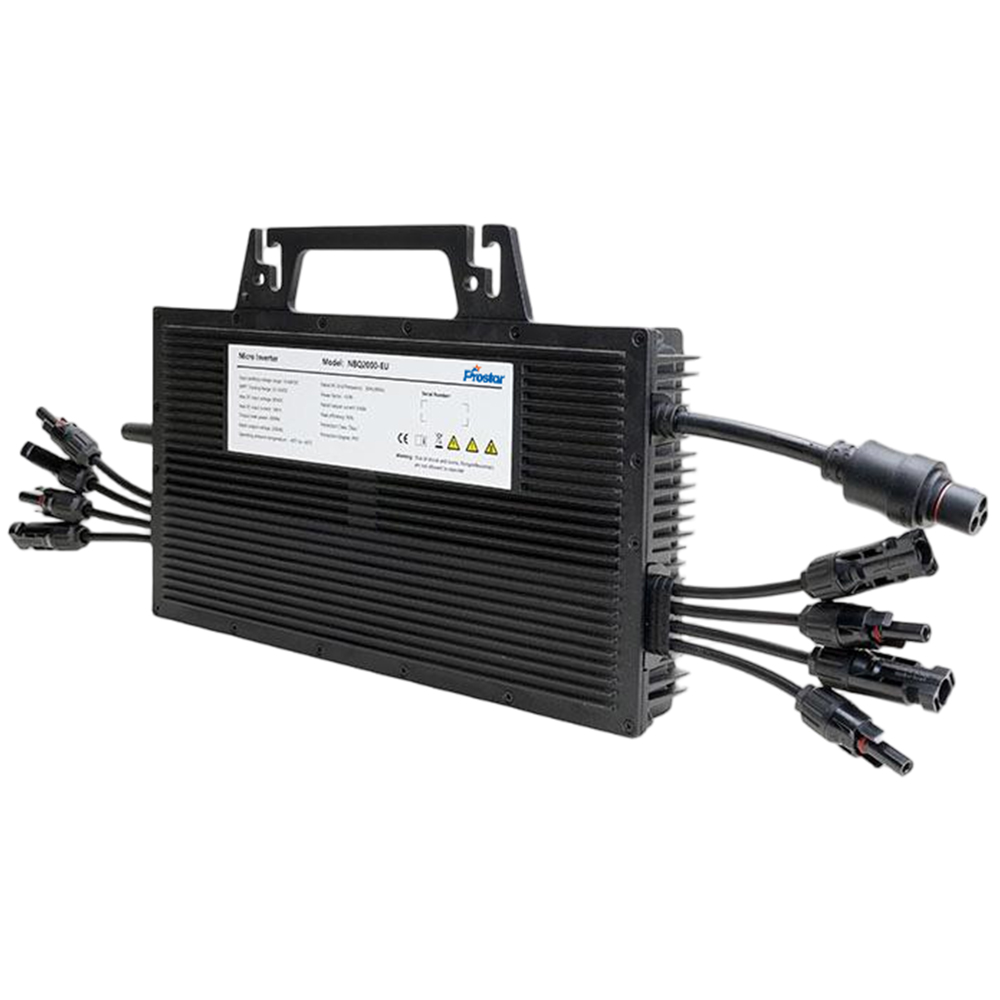
Prostar NBQ2000-EU single phase 2000w pure sine wave micro inverter solar designed for single‑phase grid‑connected residential and small commercial solar systems. It delivers up to 2000 W of continuous AC power. It converts DC from a single PV module or small string into a stable, pure sine wave output. This output meets European grid standards.
The NBQ2000-EU 2000w pure sine wave micro inverter solar is engineered for reliability, safety, and easy installation. It is ideal for rooftop installations and retrofit projects. It’s also perfect for distributed generation where performance and grid compliance matter.
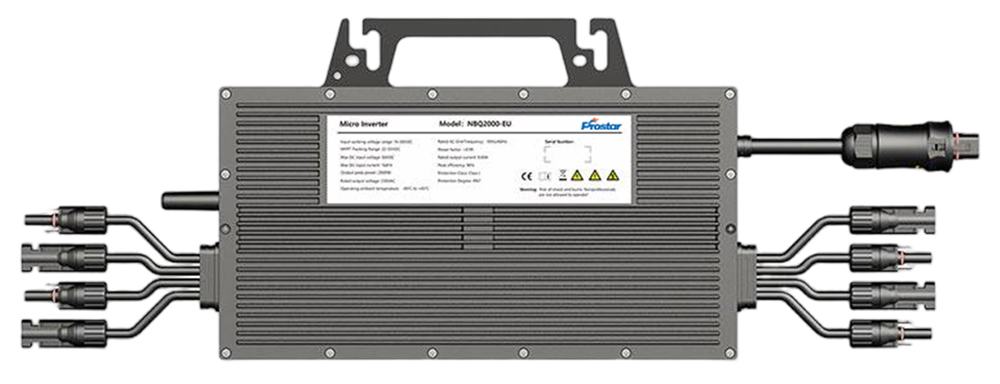

Micro Inverter Solar Key Features
Pure Sine Wave Output
Clean AC waveform compatible with residential grid standards and sensitive electronics.
4-in-1 Design
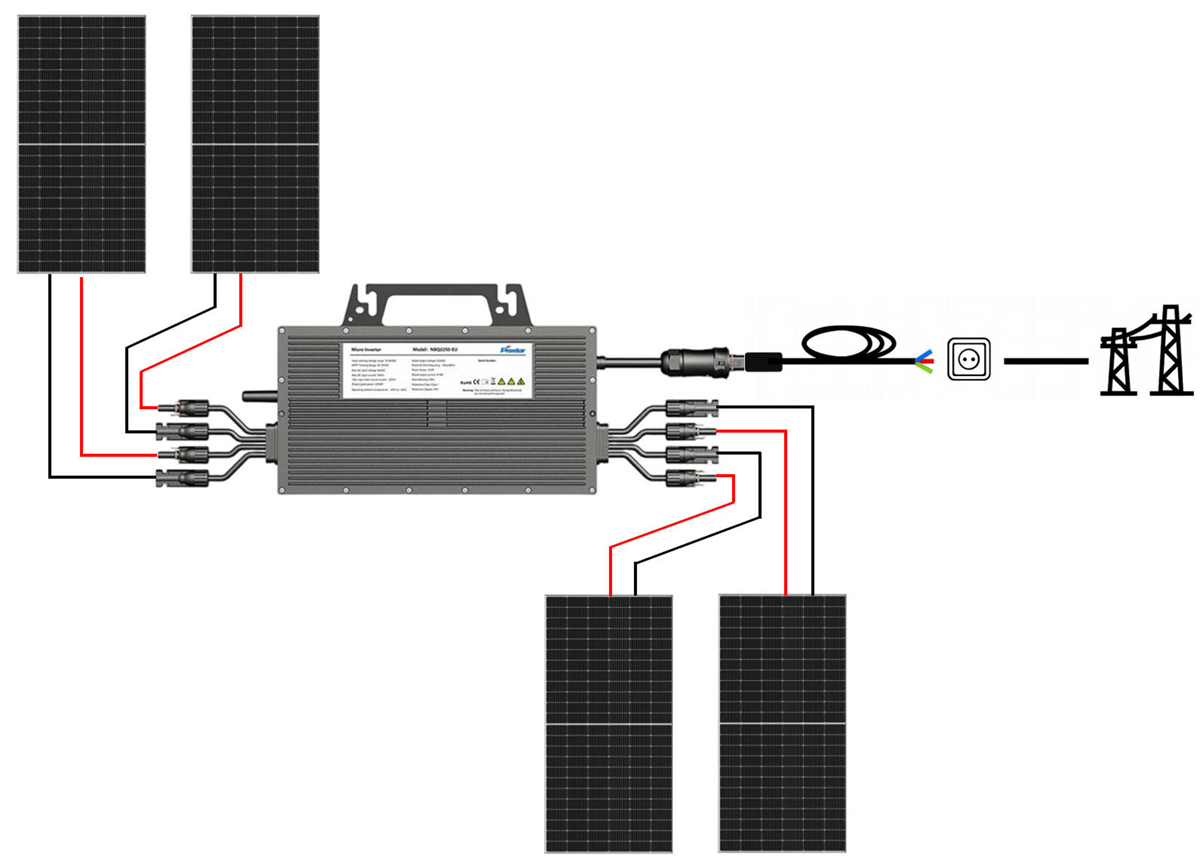
Four independent MPPT inputs allow connection of up to four PV modules (or strings), optimizing energy harvest per module and minimizing mismatch losses.
Grid-Tied Operation
Synchronizes to the utility grid frequency and voltage with fast response and anti-islanding protection.
Installation
Lightweight, compact enclosure with simple AC and DC connections; suitable for wall or rail mounting
Smart Monitoring
Built-in WiFi communication and web/cloud monitoring support for real-time production data, historical logs, and remote diagnostics.
Connection Diagram

Technical Highlights
- Maximum AC Power: 2000 W
- Nominal AC Output Voltage: 220/230 VAC (single-phase)
- AC Output Frequency: 50/60 Hz (region dependent)
- Maximum Efficiency: ≥96%
- Max. PV Input Power: 275W-530W(4 Pieces)
- MPPT Inputs: 4 independent channels
- MPPT Voltage Range: ~22–55 V
- Max DC Input Current per MPPT: 16A
- Ingress Protection: IP67
- Operating Temperature Range: approximately -40 °C to +60 °C
- Communication: Built-in Wi‑Fi Kit
- Dimensions: 342×225.4×50 mm
Typical Applications
- Residential rooftop PV where single modules or small strings feed a single-phase household circuit
- Small commercial premises with single-phase distribution
- Retrofit projects where existing roofs or limited space favor small, distributed inverters
- Off-grid-like setups that feed local single-phase loads while exporting surplus to the grid (when configured for grid‑tied operation)
Installation and maintenance
- Install per local electrical code and utility interconnection requirements; use a qualified electrician.
- Ensure correct DC polarity and PV open‑circuit voltage limits before connection.
- Provide appropriate AC overcurrent protection and a dedicated breaker as required by regulations.
- Maintain ventilation clearance around the unit; inspect periodically for dust, debris, and secure connections.
- Use the manufacturer’s monitoring portal or local interface to check performance and firmware updates.
Frequently Asked Questions (FAQ)
- Q: What PV module size is suitable?
A: Use modules whose Vmp falls within the NBQ2000-EU MPPT window and Voc below the inverter’s max DC input voltage; typical single 60–72 cell modules or small strings are suitable. - Q: Can it export power to the grid?
A: Yes — it’s grid‑tied and supports exporting per EU interconnection rules; configure per utility requirements. - Q: What communications are available for monitoring?
A: WiFi gateways for cloud monitoring and data logging. - Q: How is safety ensured during grid outage?
A: Anti‑islanding protection prevents energizing the grid during outages; additional local protection per code is recommended. - Q: What maintenance is required?
A: Minimal — periodic inspection for dust, tight connections, and firmware updates; keep ventilation clear.
The Articles You may Like
- The Indispensable Role of Online UPS for Industrial Use
- Stand-alone power system – Wikipedia
- Enhancing Performance in Fast Charging Lithium-Ion Battery
- How Long Should the Durable Online UPS Systems Last
- Safeguard Your Electronics with a UPS Backup Power Supply for Home
- How 3 Phase Lithium UPS System Enhances Backup Power Performance
- Industrial ups power supply vs normal UPS