
UPS for Data Centers: Reliable Power Protection for Critical Infrastructure
Modern data centers demand zero downtime, but unstable power remains one of the biggest risks.
A properly designed UPS for data centers ensures uninterrupted operation, protects critical equipment, and maintains business continuity.
In this guide, you will learn:
- How data center UPS systems work
- Why modular online UPS is the industry standard
- How to choose the right UPS architecture for your facility
What is a UPS for Data Centers?
A data center UPS system (Uninterruptible Power Supply) provides instantaneous backup power and stabilizes voltage for critical IT infrastructure.
Key Functions:
- Prevent downtime during power failure
- Protect servers from voltage fluctuations
- Ensure clean and stable power supply
- Support seamless generator transition
UPS for data centers
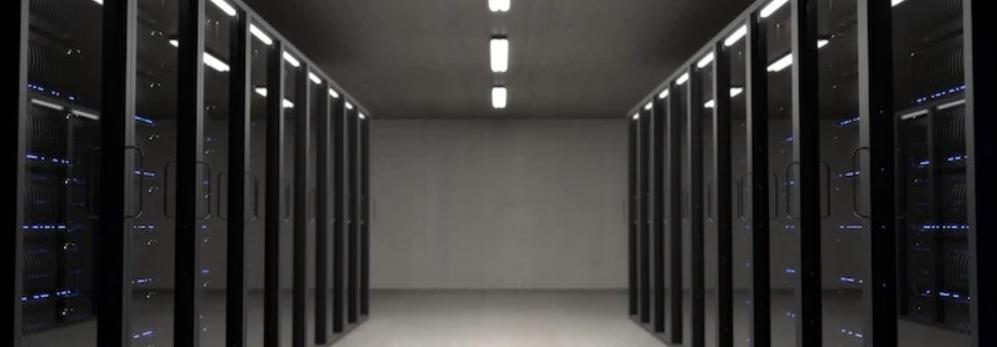
Data center applications require reliable power sources. When watch entire seasons of shows from streaming services, because it’s the new era. People walk around with smartphones continously connected to the internet. People share content with all their relations using internet. Many examples need internet and significant storage. Infrastructure is the primary foundation of data center jobs.
The data center is the heart of the internet, ensure this information is available at all times. And the data centers need to be non sensitive to power outage.
An uninterruptible power supply (UPS) is essential equipment in every data center. It ensures that servers and all sensitive computing equipment are immune to power line disturbances. Additionally, it addresses power quality issues.
Types of UPS Systems Used in Data Centers
1. Online Double Conversion UPS
he most widely used solution in modern data centers.
Advantages:
- Zero transfer time
- Complete power isolation
- Highest reliability
Ideal for:
- Tier III & Tier IV data centers
- Mission-critical applications
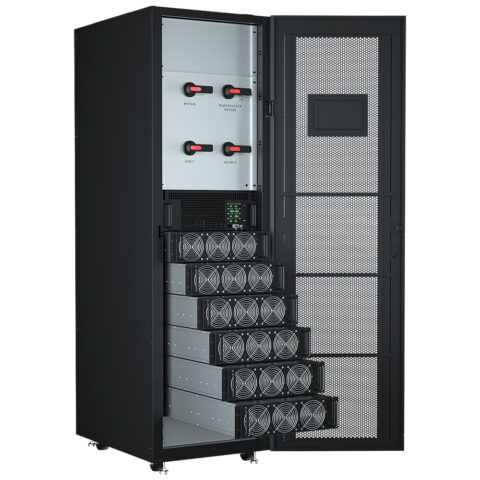
2. Modular Online UPS (Best Choice)
A modular online UPS is the preferred architecture for scalable data centers.
Key Benefits:
- Hot-swappable modules (no downtime maintenance)
- Scalable capacity (N+1 / N+X redundancy)
- Lower total cost of ownership (TCO)
Example:
- Start with 100kVA → expand to 500kVA without replacing system
DC power supplies in Data Center Systems
Computing equipment such as servers and routers rely on an internal power supply. This supply provides the regulated DC power required to run the processors and peripheral devices. These power supplies can handle only a small variance in supply voltage. If the variance exceeds this limit, the computing equipment becomes susceptible to shutdown or overload.
The Information Technology Industry Council (ITI) has created a curve. There is also an application note that describes the input voltage envelope. This envelope specifies what typical information technology equipment can tolerate.
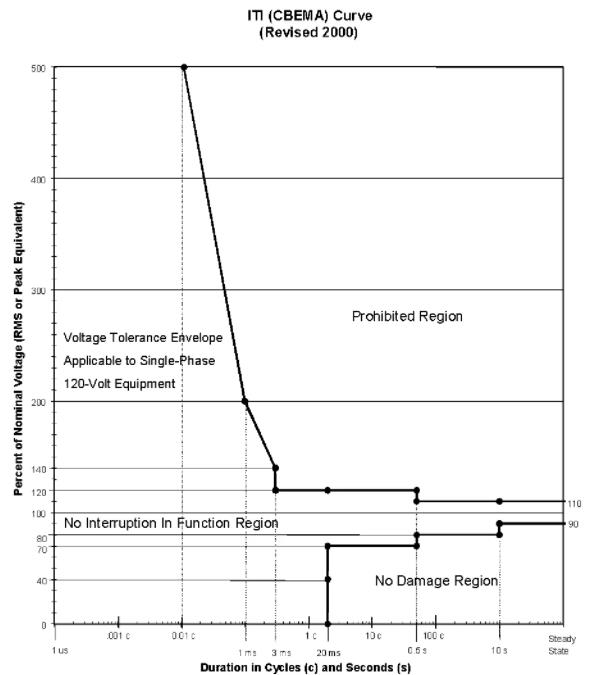
As an example, the curve shows that most equipment would be able to withstand a voltage dropout up to 20 ms. A UPS for data centers ensures the input voltage to computing equipment remains stable. It keeps the voltage within the “No Interruption in Function Region” of the voltage envelope.
Components of UPS power supply
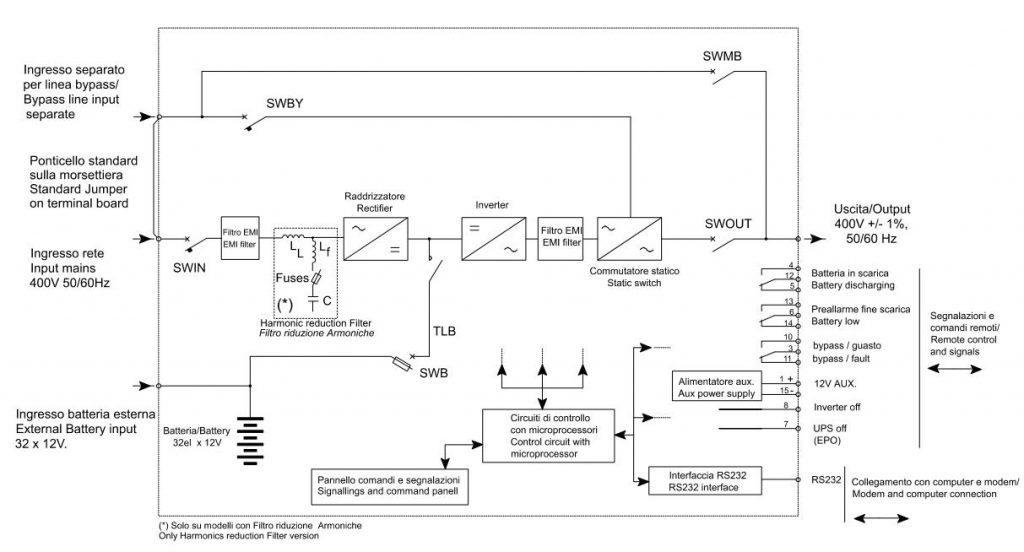
There are several types of uninterruptible power supplies. These will be defined below. All UPS systems will make use of the following components.
- Rectifier: The rectifier converts the input AC power into DC power. This DC power will be used to feed an energy storage system.
- Energy Storage: Every UPS will use some type of system for storing energy in case of input power failure. This energy may be stored in the form of batteries, flywheels, or supercapacitors. It is this stored energy that allows a UPS to supply uninterrupted power.
- Inverter: The inverter transforms DC power from the rectifier. It can also utilize energy from the storage system. This power is then converted into the required AC power for the load.
UPS redundancies for data center load
In order to meet the high uptime requirements for data centers, UPS systems with redundancy function.
N+1 Redundancy
Let’s define “N” as the full UPS capacity required to handle the total load.
In this multi-module system, each UPS is capable of providing the required “N” power.
2N Redundancy
Enterprise level IT equipment often supports dual power supply operation. In a data center, these two sources would be independent UPS systems. An “A side” and a “B side” can feed the computer equipment. Each side would be able to handle 100% load capacity.
2(N+1) Redundancy
Take for example having a 2N redundant power distribution system. Instead of a single module UPS on each side, there would be multiple modules. This provides N+1 redundancy on each side.
A monolithic UPS system typically has to be significantly oversized for future-proofing. These factors force the monolithic system to work with low loads, where efficiency drops away sharply.
Transformerless multi-level UPS topology
Today, the most advanced UPS systems deployed in data centers use a transformer-less multi-level topology. The topology ensures the highest reliability and efficiency.
To meet ever-increasing pressure to curb power consumption, uninterruptible power supply users must take advantage of every technique. They should focus on improving energy efficiency.
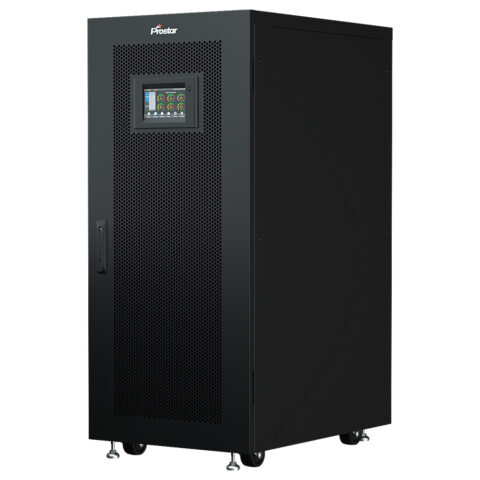
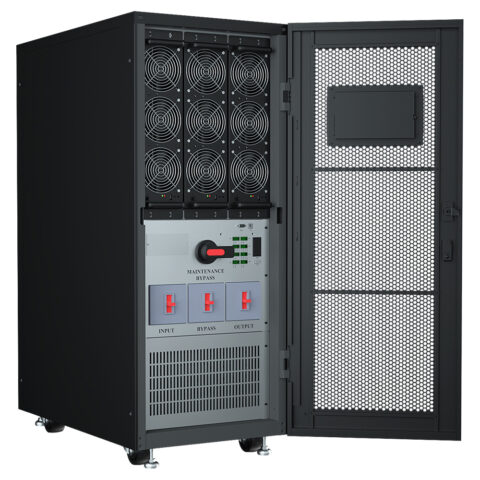
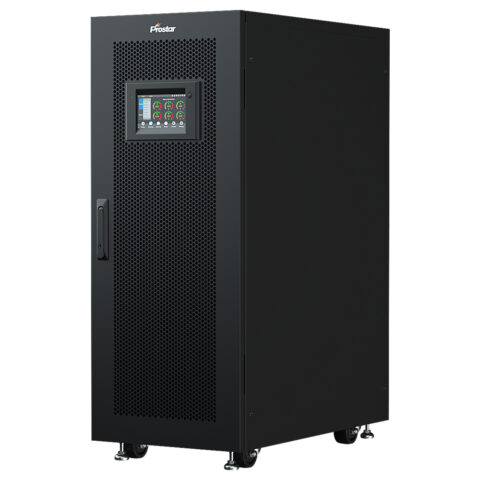
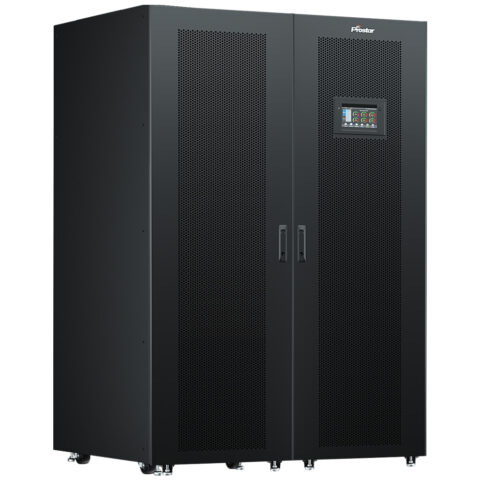
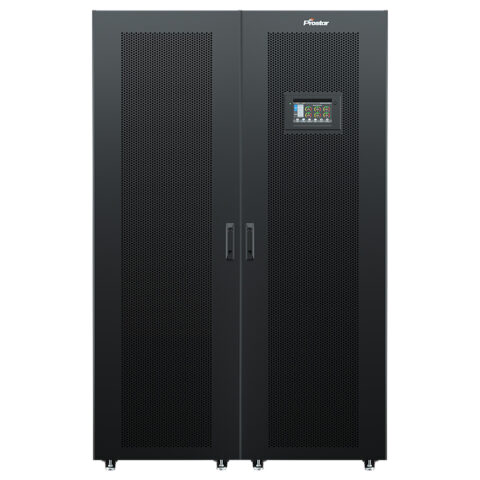
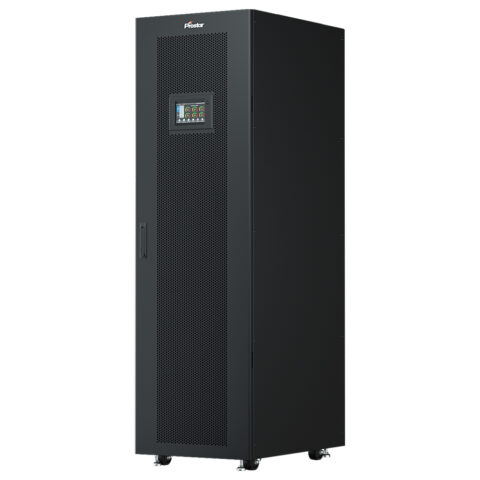
Uninterruptible Power Supply UPS for Data Centers
How to Choose the Right UPS for Data Centers
Capacity Planning
– Consider future expansion
Scalability
Efficiency
Battery Type
– VRLA (traditional)
Redundancy Level
– Tier III → N+1
– Tier IV → 2N
Why Modular Online UPS Is the Future
Modern data centers are moving toward modular UPS systems because they provide:
- Faster deployment
- Flexible expansion
- Reduced maintenance risk
- Higher system availability
This is why leading facilities adopt modular online UPS architecture.
Typical Data Center UPS Architecture
A standard system includes:
- Rectifier
- DC Bus
- Inverter
- Static Bypass
- Battery System
This ensures continuous power flow even during faults.
FAQ
What UPS is used in data centers?
Why is modular UPS better for data centers?
What does N+1 mean in UPS?
How long can a data center UPS run?
What is the best UPS for large data centers?
The Articles You may Like
- What is the difference between modular UPS and conventional UPS
- Navigating the Data Realm with Futuristic Rack Mountable UPS Solutions
- Uninterruptible power supply – Wikipedia
- Understanding the Online UPS Power Supply Benefits
- Prostar three phase 160kva ups installed for MRI machine in hospital
- How Long Should the Durable Online UPS Systems Last
- The Best Off Grid Solar System for Your Needs
Get a Custom UPS Solution
Looking for the right UPS for your data center project?
Contact Prostar today to get:
- System design recommendation
- Load calculation support
- Competitive quotation
Chat Online
Scan below QR code add Mr. Orson’s Wechat to Talk directly!

Download CATALOG