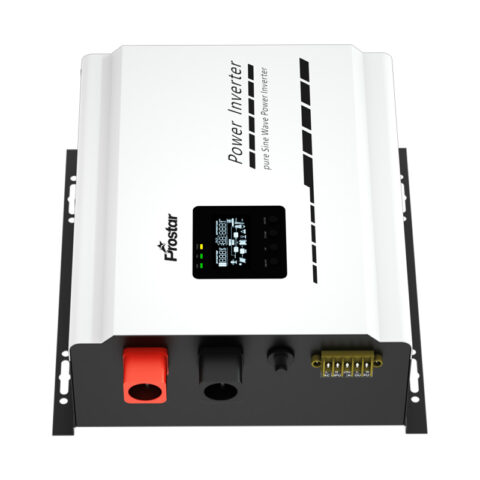
PIL0.3K 300 Watt Inverter Pure Sine Wave for Home Backup Power
Power Inverter | 300W | 12Vdc | Pure Sine Wave Output | 0-10A AC Charger
Power interruptions can happen unexpectedly, whether caused by storms, unstable utility grids, or local electrical maintenance. Even a brief outage can interrupt work, damage sensitive electronics, or disconnect essential home devices.
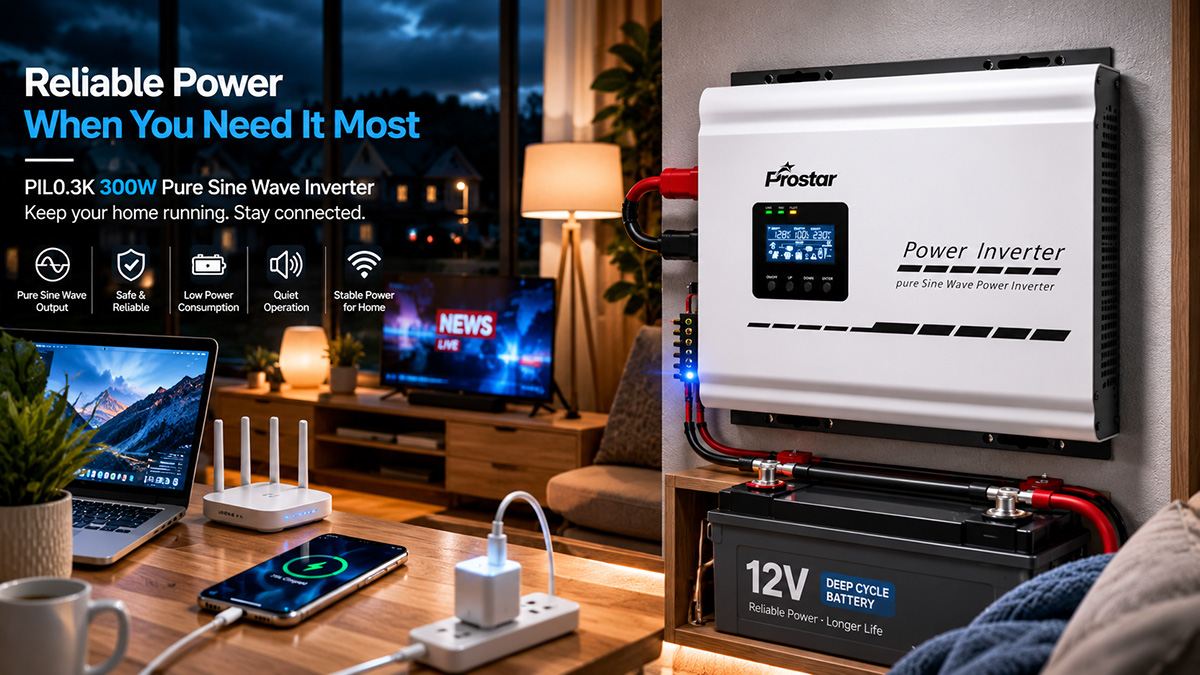
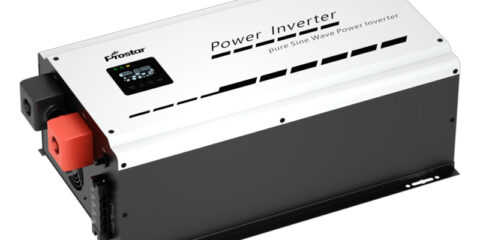
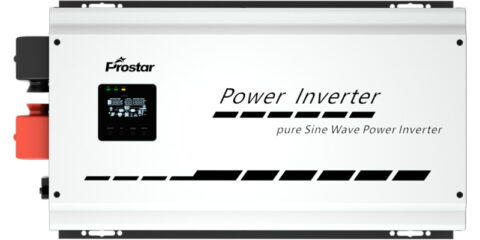
Prostar 300 watt inverter offers an efficient and economical solution for powering low-power household appliances during outages. Among the available options, the PIL0.3K Pure Sine Wave Inverter is designed to provide stable AC electricity with utility-grade waveform quality, making it ideal for homes, cabins, RVs, and small off-grid solar systems.
Why Do You Need a 300 Watt Inverter?
Many homeowners mistakenly purchase oversized inverters, believing larger capacity always provides better protection. In reality, selecting an inverter that matches your actual load offers several advantages:
- Lower purchase cost
- Higher operating efficiency under light loads
- Reduced standby power consumption
- Smaller installation space
- Longer battery runtime
A 300 watt inverter is specifically designed for powering essential electronic equipment rather than high-power appliances.
Typical applications include:
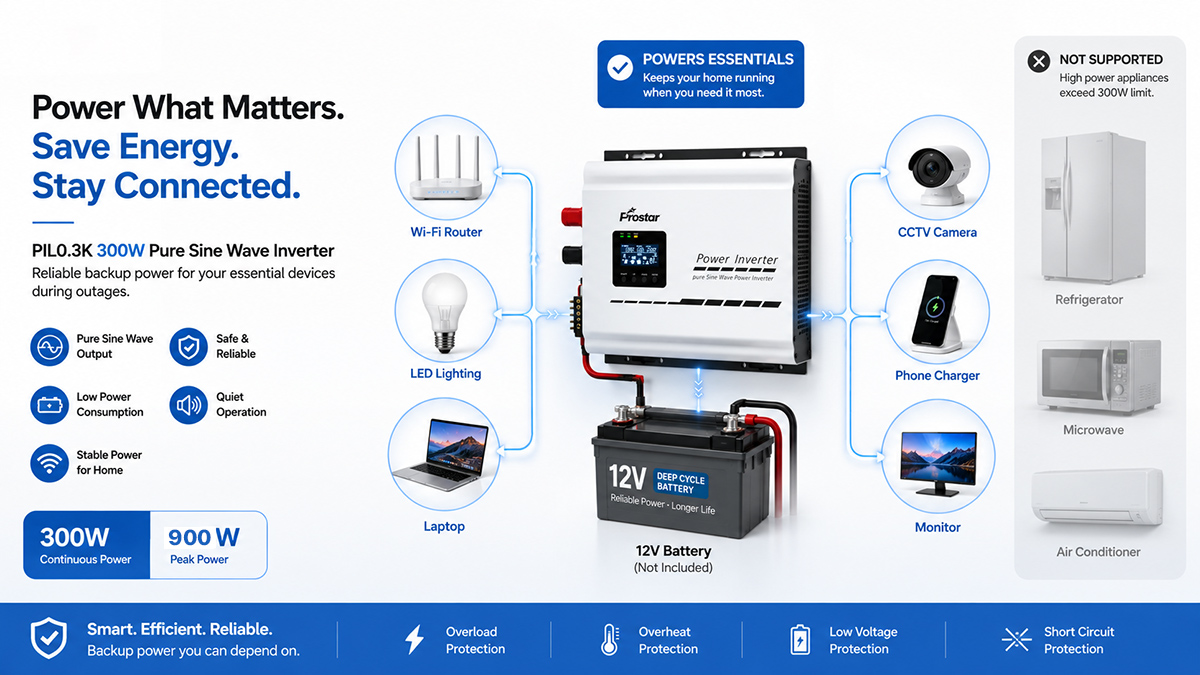
- Wi-Fi routers
- LED lighting
- Laptop computers
- LCD monitors
- Television boxes
- Security cameras
- Charging mobile devices
- Small medical equipment
- Network communication devices
For daily emergency backup, these loads rarely exceed 300W.
Understanding the Problem
Before evaluating any specific unit, it helps to understand why picking the wrong inverter creates more problems than it solves.
Modified Sine Wave Damages Sensitive Electronics
Many low-cost inverters produce a modified sine wave — a stepped approximation of the smooth AC power that comes from your wall outlet. While this is acceptable for simple resistive loads like incandescent bulbs or basic power tools, modified sine wave output causes serious issues with:
- Laptops and computers (overheating power supplies, reduced battery life)
- CPAP/APAP machines (motor inefficiency, noise, voided warranties)
- LED lighting (flickering and buzzing)
- Televisions and audio equipment (distortion, power supply stress)
- Refrigerators and microwaves (reduced efficiency, motor damage over time)
This is precisely why understanding the difference between a pure sine wave vs modified sine wave 300 watt inverter is not a technicality — it’s a practical safety and compatibility issue.
Undersized or Oversized Wattage
Choosing a 300 watt inverter that is actually rated lower (using “peak” wattage misleadingly) leads to tripped circuits or damaged devices. Conversely, purchasing a 1,000W+ inverter for light home backup needs means paying more, carrying more weight, and drawing more idle current from your battery bank.
Voltage Instability Under Load
Poor-quality inverters suffer from voltage sag when loads approach rated capacity. This results in unstable power delivery — particularly harmful for devices with microprocessors and variable-speed motors.
Key Features
Pure Sine Wave Output
Provides clean and stable pure sine wave power, ensuring safe operation for sensitive electronics, home appliances, computers, networking devices, and medical equipment.
Continuous Power with 900W Surge Capacity
Delivers 300W continuous output and up to 900W surge power, making it suitable for inductive loads with high startup current.
Wide AC Input Voltage Range
Accepts 220/230/240VAC input with a wide operating range (+25%, -30%), allowing reliable operation even under unstable utility power conditions.
Fast Automatic Transfer (<8ms)
Automatically switches between utility power and battery power within less than 8 milliseconds, minimizing interruptions during power failures.
Intelligent Multi-Stage Battery Charger
Built-in smart charger supports adjustable charging current from 0–10A, optimizing charging performance while extending battery life.
Smart Cooling System
Temperature-controlled intelligent cooling fan reduces operating noise while improving thermal management and system reliability.
Built-in Protection
The inverter includes comprehensive protection against:
- Overload
- Short circuit
- Battery over-voltage
- Battery under-voltage
- High temperature
- Reverse polarity
- AC input abnormalities
Technical Specification
| Specification | Details |
| Model | PIL0.3K |
| Output Power | 300 Watts |
| Peak Power | 900 Watts |
| Output Waveform | Pure Sine Wave |
| Input Voltage | 12V DC |
| Output Voltage | 220V/230V/240VAC±3%(AC Mode ±10%) |
| Output Frequency | 50/60 Hz ± 0.5Hz Auto(AC Mode ±2.5Hz) |
| Efficiency | ≥ 81% |
| THD | < 3% |
| AC Charging Current | 0-10A |
| Protection | Over-voltage, under-voltage, overload, short-circuit, over-temperature |
| Form Factor | Compact |
| Ideal Use | Home backup, camping, vehicles, small office |
Typical Home Backup Applications
The PIL0.3K is ideal for powering critical household electronics during outages.
Examples include:
| Device | Typical Power |
| Wi-Fi Router | 10W |
| LED Light | 8–15W |
| Laptop | 60W |
| LCD Monitor | 35W |
| Television Box | 20W |
| CCTV Camera | 10W |
| Mobile Charger | 10W |
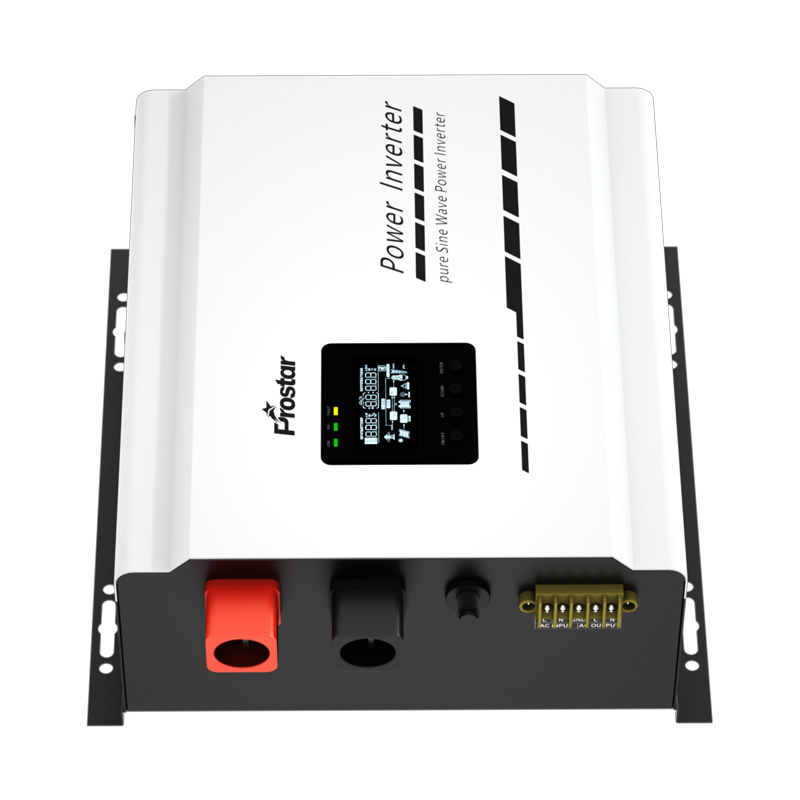
300 Watt Inverter Schematic Diagram

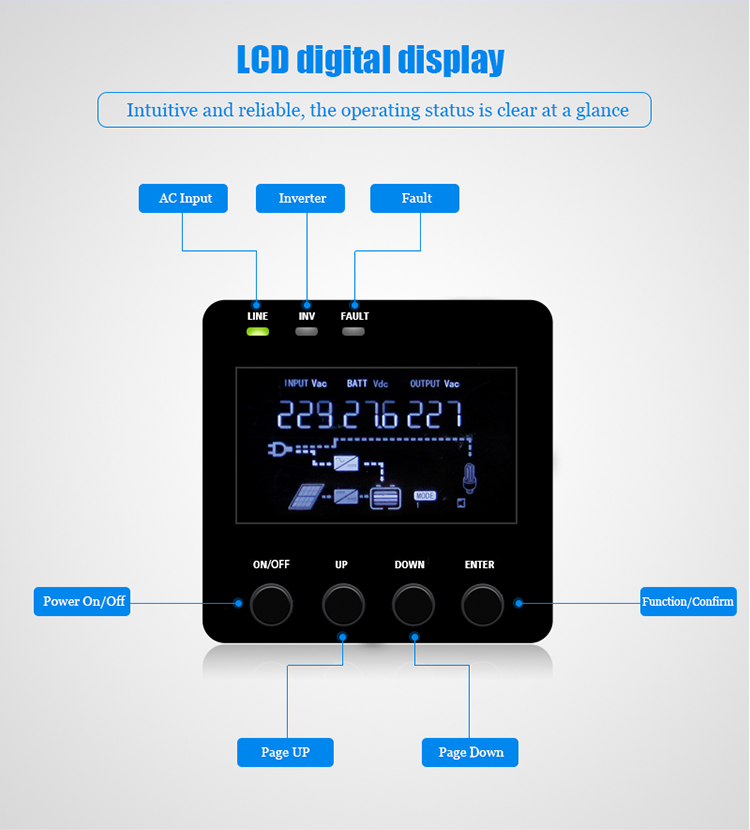
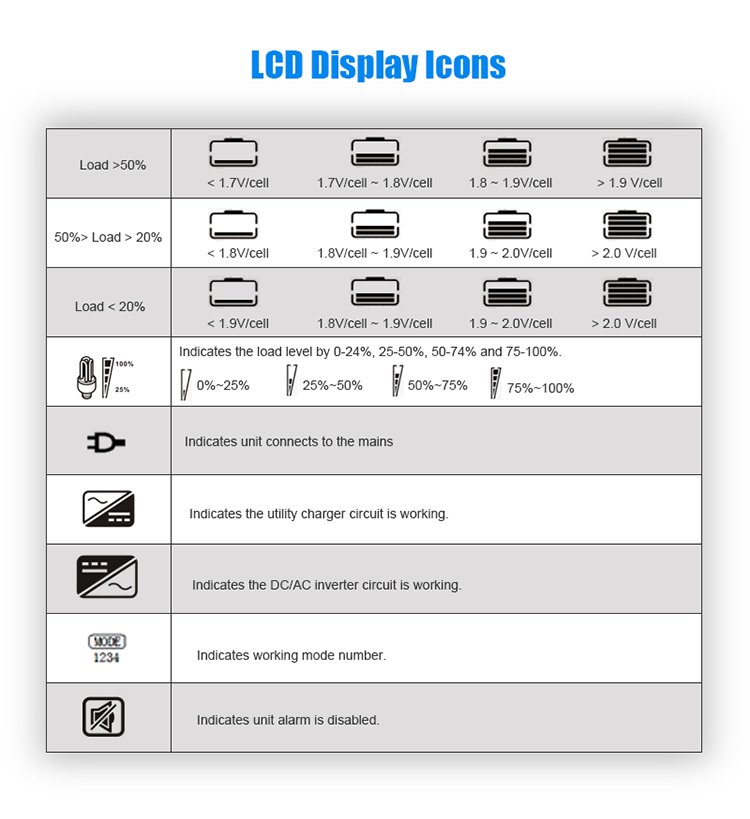
LCD Display
How the 300 Watt Inverter Work
True Pure Sine Wave Output
The PIL0.3K produces a genuine pure sine wave with Total Harmonic Distortion (THD) below 3% — matching or exceeding the quality of utility grid power in most regions. This makes it the best 300 watt pure sine wave inverter for home use in its class for the following reasons:
- Laptops and smartphones charge efficiently without heat buildup
- CPAP machines run quietly and at rated efficiency — essential for users with sleep apnea who cannot afford power failure at night
- Smart TVs, streaming devices, and routers operate normally, maintaining your home network during an outage
- LED and CFL bulbs illuminate without flicker or buzz
The clean sine wave output is not marketing language — it is a measurable, verifiable specification (THD < 3%) that directly determines device compatibility and longevity.
Honest 300W Continuous Rating
Unlike many budget inverters that advertise peak wattage as if it were continuous output, the PIL0.3K is rated at 300 watts continuous with a 900-watt surge capacity. This surge capacity handles the inrush current demands of devices like refrigerator compressors and motor-driven appliances during startup — a common failure point for cheaper units.
Stable Voltage Under Load
With AC efficiency rating above 91% and active voltage regulation circuitry, the PIL0.3K maintains consistent 220V/230V or 110V-120V AC output even as the load approaches its rated capacity. This protects microprocessor-based devices and ensures that sensitive electronics — printers, medical equipment, gaming consoles — receive the stable voltage they require.
What Can a 300 Watt Inverter Run at Home?
This is one of the most frequently asked questions when homeowners begin researching backup power. Here is a practical, honest breakdown of what a 300 watt inverter can run at home:
Appliances Within Range (≤ 300W Continuous)
| Device | Typical Wattage | Compatible? |
| Laptop computer | 45–100W | ✅ Yes |
| Smartphone charger | 5–25W | ✅ Yes |
| LED desk lamp | 5–15W | ✅ Yes |
| Wi-Fi router | 10–20W | ✅ Yes |
| CPAP machine (no heater) | 30–60W | ✅ Yes |
| Small fan | 25–75W | ✅ Yes |
| Tablet / e-reader | 10–30W | ✅ Yes |
| Small LED TV (32″) | 30–80W | ✅ Yes |
| Portable mini-fridge (12V-converted) | 40–100W | ✅ Yes |
| Phone charging station (multiple) | 60–120W | ✅ Yes |
Appliances That Exceed 300W (Not Recommended)
| Device | Typical Wattage | Compatible? |
| Microwave oven | 700–1,200W | ❌ No |
| Hair dryer | 1,200–1,800W | ❌ No |
| Electric kettle | 1,000–1,500W | ❌ No |
| Full-size refrigerator | 150–400W + surge | ⚠️ Marginal |
| Space heater | 750–1,500W | ❌ No |
| Window AC unit | 500–1,200W | ❌ No |
A portable 300 watt inverter for power outage situations is optimally suited for communication, computing, lighting, and medical support — not high-draw heating or cooling appliances. Understanding this prevents overload and extends equipment life.
How Long Can a 300 Watt Inverter Run?
Runtime depends primarily on battery capacity.
For example:
12V 100Ah Battery
Battery Energy:
12V × 100Ah = 1200Wh
The inverter efficiency at battery mode: 81%
Usable Energy ≈ 972Wh
Estimated runtime:
- 100W Load → about 9.7 hours
- 150W Load → about 6.5 hours
- 300W Load → about 3.2 hours
Actual runtime varies depending on battery age, temperature, depth of discharge, and load characteristics.
Installation and Usage Guide
Step 1: Select Your Battery
For home backup use, a 12V AGM or lithium iron phosphate (LiFePO4) battery of 50–100Ah capacity is recommended. LiFePO4 is preferred for its depth of discharge (80–100% usable), longer cycle life, and lighter weight.
Step 2: Connect Safely
- Always connect the inverter to the battery using the provided cables, red to positive (+), black to negative (−)
- Ensure connections are tight and corrosion-free
- Position the inverter in a ventilated area — do not enclose it in a sealed cabinet
- Keep at least 6 inches of clearance around the unit for airflow
Step 3: Calculate Your Load Before Powering On
Add up the wattage of all devices you plan to connect. Ensure the total does not exceed 270–280W (leaving a 10% safety margin below the 300W rating) to avoid triggering overload protection under normal use.
Step 4: Start Devices Sequentially
Power on devices one at a time rather than simultaneously to avoid surge current stacking. Start with the highest-draw device first, then add smaller loads.
FAQ
Can a 300 watt inverter run a refrigerator?
Can I connect a laptop and Wi-Fi router together?
Can I use the PIL0.3K 12v inverter in my car?
What is the idle power consumption of the 300 watt power inverter?
Does the PIL0.3K 300w pure sine wave inverter work with solar panels?
The Articles You may Like
- What are the pros and cons of a solar generator?
- How does an uninterruptible power supply work?
- 8 tips to select your off grid solar inverter
- Choose the Smart UPS between Online UPS vs Line Interactive UPS
- Choosing the Right Solar Inverter for Home Use
- How to avoid the shadow effect on solar panels?
- Solar inverter – Wikipedia
| Model | PIL0.3K |
| Rated Power | 300W |
| INPUT | |
| Voltage Range | 220V/230V/240V(+25%,-30%) |
| Nominal Frequency | 50/60 Hz |
| Frequency Range | 43 – 70Hz |
| OUTPUT | |
| AC Voltage Regulation | 220V/230V/240VAC±3%(AC Mode ±10%) |
| Frequency | 50/60 Hz ± 0.5Hz Auto(AC Mode ±2.5Hz) |
| Surge Power | 900W |
| Battery Efficiency | 81% |
| AC Efficiency | 93% |
| Transfer Time | < 8ms |
| Waveform | Pure Sine Wave |
| THD | < 3% (Linear Load) |
| BATTERY | |
| Battery Type | AGM / Gel / Flooded / Lithium (Optional) |
| Battery Voltage | 12VDC |
| Floating Charge Voltage | 13.8VDC |
| Overcharge Protection | 15.0VDC |
| Max. AC Charging Current | 0-10A |
| PROTECTION | |
| Output Short Circuit | AC Mode: Fuse trips. Inverter Mode: Automatic shutdown |
| Overload | At 100% Load: Continuous audible alarm. At 120% Load: Automatic shutdown after 10 seconds. (System automatically recovers once the load returns to normal). |
| High AC Voltage | Automatically cuts off AC input and switches to Inverter Mode. |
| Low DC Voltage | Automatically shuts down to protect the battery. Once AC power restores, the inverter automatically restarts and begins charging. |
| Over Temperature | Automatic shutdown. |
| GENERAL | |
| IP Rating | IP20 |
| Display | LCD + LED Indicator |
| Displayed Information | Load level, Battery capacity, Input/Output voltage, Fault codes |
| Cooling | Smart Fan |
| ENVIRONMENT | |
| Humidity | 15~93%(No condensation) |
| Temperature | -10℃ ~ 50℃ |
| Altitude | ≤3000m |
| Communication | RS232 (Standard); USB/WiFi/RS48/SNMP/Dry Contact (Optional) |
| MECHANICAL | |
| Dimension (mm) | 352×308×133 |
| Net Weight (Kg) | 4.7 |
Download CATALOG