
Modern telecommunications depend on uninterrupted power. These systems support 4G LTE, 5G networks, microwave transmission, fiber-optic nodes, and remote communication towers. However, every second of downtime is critical. Even a brief interruption can result in dropped connections, lost revenue, and dissatisfied customers.
A UPS for telecom base station serves as the first line of defense against grid instability and voltage fluctuations. It also protects against unexpected power failures. However, selecting the right telecom UPS involves much more than simply matching the power rating.
Why Telecom Base Stations Need a Dedicated UPS
Grid Instability and Unpredictable Outages
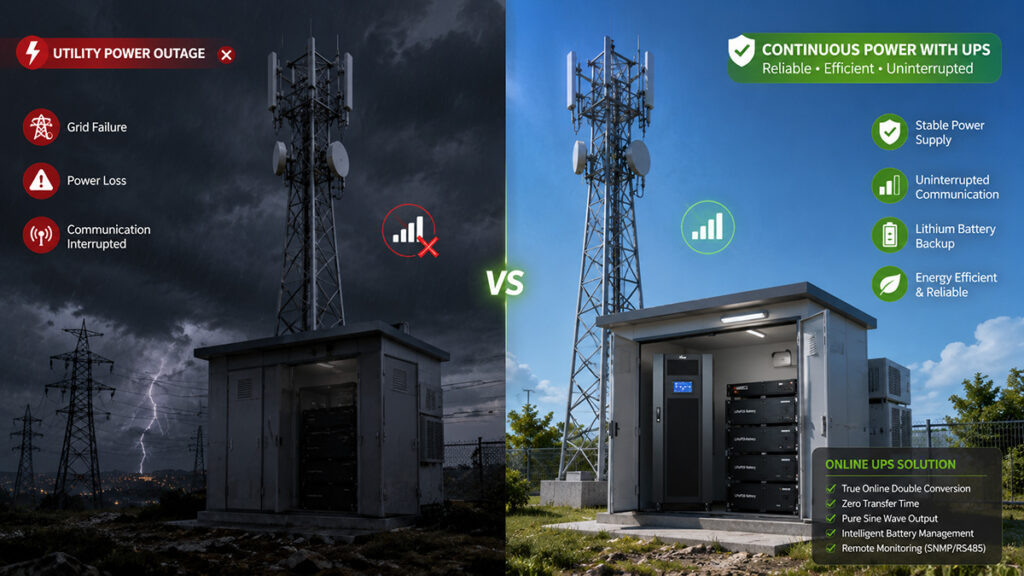
Base transceiver stations (BTS) are frequently deployed in regions with unstable utility grids — rural areas, developing markets, and disaster-prone zones. Voltage sags, brownouts, and total blackouts can occur several times a day.
A robust UPS is essential for telecom base station deployment. Without it, even a few seconds of interruption can cause a full reboot of baseband units, radio units, and transmission equipment. This results in minutes of downtime per event.
Remote and Unmanned Sites
Many telecom towers sit in locations without on-site staff. If a battery bank fails silently or a UPS overheats without anyone noticing, the site can stay dark for days. This happens before a technician eventually arrives.
This makes remote monitoring for telecom UPS systems not a luxury but a core requirement. It is a long-tail need that shapes almost every purchasing decision in this sector.
The 5G Power Surge Problem
5G base stations consume significantly more power than legacy 3G/4G equipment due to Massive MIMO antennas and denser small-cell deployments.
Operators who reuse old UPS sizing assumptions from 4G rollouts often discover their backup runtime has silently collapsed by 30–50%.
This is one of the most common — and costly — mistakes in telecom power planning. It directly raises the question of how to size a UPS for telecom base station upgrades correctly.
Harsh Environmental Conditions
Outdoor cabinets and rooftop shelters expose UPS units to temperature extremes, humidity, dust, and salt fog (in coastal regions).
Standard indoor-grade UPS hardware degrades quickly under these conditions, shortening battery life and increasing failure rates.
This creates strong demand for a purpose-built outdoor UPS system for 5G base stations, engineered with IP-rated enclosures and wide operating temperature ranges.
Battery Chemistry Limitations
Traditional valve-regulated lead-acid (VRLA) batteries, long the default choice, suffer from short cycle life, heavy weight, and sensitivity to temperature.
In high-heat climates, VRLA battery life can drop to under two years — a serious problem for operators trying to control total cost of ownership (TCO).
Load Compatibility and Waveform Sensitivity
Modern telecom rectifiers and DC power systems are sensitive to power quality. A UPS producing a poor-quality waveform, slow transfer time, or unstable frequency can cause nuisance trips or equipment stress, even while “technically” providing backup power.
Common Challenges When Selecting a UPS for Telecom Base Station
Many buyers focus only on UPS capacity while overlooking critical deployment factors.
Some of the most common mistakes include:
Choosing Based Only on VA Rating
A telecom UPS should be sized according to actual load power (W), future expansion, and startup current—not simply its VA rating.
Oversizing increases initial investment, while undersizing reduces reliability and battery backup time.
Ignoring Battery Autonomy Requirements
Different telecom sites require different backup durations.
Typical requirements include:
| Site Type | Recommended Backup Time |
|---|---|
| Urban Macro Site | 30–60 minutes |
| Rural Base Station | 2–4 hours |
| Remote Telecom Tower | 4–8 hours |
| Critical Communication Hub | 8+ hours |
Battery autonomy depends on:
- Load power
- Battery voltage
- Battery capacity
- UPS efficiency
- Ambient temperature
- Battery aging
Selecting the correct battery bank is just as important as selecting the UPS itself.
Overlooking Environmental Conditions
Many telecom shelters experience temperatures exceeding 45°C (113°F).
Dust, humidity, salt spray, and vibration can significantly shorten UPS lifespan.
A reliable UPS for Telecom Base Station should offer:
- Wide operating temperature range
- Intelligent fan speed control
- Conformal-coated PCBs
- Dust-resistant design
- High MTBF (Mean Time Between Failures)
Outdoor telecom cabinets may require even higher protection levels.
How to Choose the Right UPS for Telecom Base Station
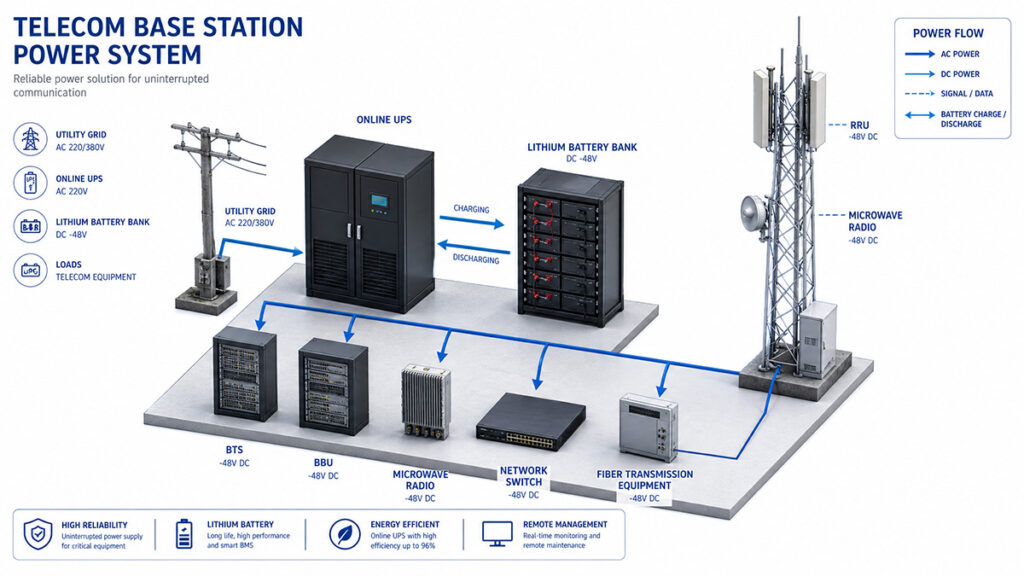
1. Determine Actual Power Load
Begin by listing every connected device:
- Base Transceiver Station (BTS)
- RRU (Remote Radio Unit)
- BBU (Baseband Unit)
- Microwave equipment
- Fiber transmission devices
- Ethernet switches
- Routers
- Monitoring equipment
- Security systems
Calculate:
Total Load = Sum of All Equipment Power Consumption
Then reserve 20–30% future expansion capacity.
2. Select the Appropriate UPS Topology
Not all UPS technologies are suitable for telecom infrastructure.
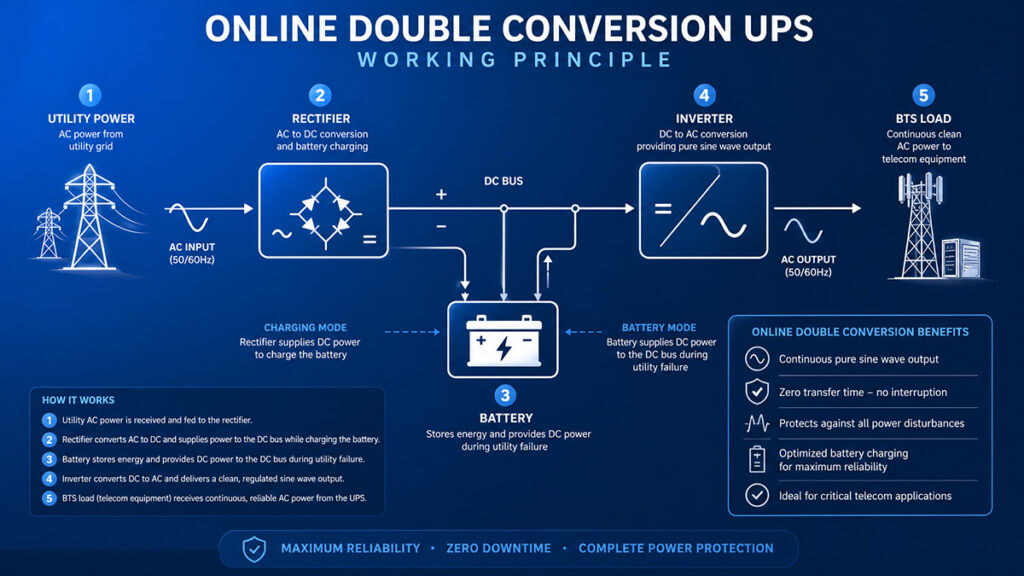
Online Double Conversion UPS
Recommended for:
- 5G base stations
- Core telecom facilities
- Mission-critical communication sites
Advantages:
- Zero transfer time
- Pure sine wave output
- Excellent voltage regulation
- Frequency stabilization
- Superior protection against grid disturbances
Line-Interactive UPS
Suitable only for:
- Small communication cabinets
- Auxiliary equipment
- Non-critical edge applications
For most professional deployments, an online UPS for telecom base station remains the preferred choice.
Modular UPS architecture
Allows N+1 redundancy by adding power modules without replacing the entire system — ideal for sites expecting load growth.
3. Consider Input Voltage Quality
Remote telecom sites often experience unstable utility power.
Look for features such as:
- Wide input voltage range
- High input power factor
- Low harmonic distortion
- Generator compatibility
- Automatic voltage regulation
These features reduce unnecessary battery cycling and extend battery life.
4. Match Battery Chemistry to Site Conditions
This is where many operators unlock the biggest reliability and cost gains:
| Factor | VRLA (Lead-Acid) | Lithium-Ion (LiFePO4) |
|---|---|---|
| Cycle life | 300–500 cycles | 3,000–6,000+ cycles |
| Weight | Heavy | 50–70% lighter |
| High-temp performance | Poor | Strong |
| Footprint | Large | Compact |
| Total cost of ownership | Higher long-term | Lower long-term |
For most new deployments, a lithium battery UPS for telecom towers is now the industry-preferred solution, particularly for sites with limited space, difficult battery replacement logistics, or extreme ambient temperatures.
5. Design for the Physical Environment
For outdoor or unconditioned shelters, specify:
- Wide operating temperature range (typically -20°C to 55°C)
- IP55 or higher ingress protection
- Anti-corrosion coating for coastal or industrial sites
- Integrated thermal management to protect battery lifespan
An outdoor UPS system for 5G base stations should be validated against local climate data, not just generic datasheet specifications.
6. Check Remote Monitoring Capabilities
Modern telecom networks require centralized management.
An intelligent UPS should support:
- SNMP
- Modbus
- RS485
- Dry contacts
- Ethernet
- Cloud monitoring
- SMS alarm
- Mobile APP monitoring
Effective remote monitoring for telecom UPS systems converts a reactive maintenance model into a predictive one, cutting emergency site visits and reducing mean time to repair.
7. Plan for Redundancy and Scalability
For Tier 1 or high-traffic sites, N+1 or 2N UPS redundancy prevents a single point of failure. Modular systems make it possible to scale capacity in step with network densification, avoiding costly forklift upgrades later.
A scalable UPS for Telecom Base Station should support:
- Parallel redundancy
- Capacity expansion
- Modular battery banks
- Flexible communication interfaces
This minimizes future replacement costs.
UPS Integration with Renewable Energy Systems
Increasingly, telecom operators deploy solar-powered base stations to reduce diesel consumption.
A telecom UPS should integrate seamlessly with:
- Solar charge controllers
- Hybrid inverters
- Lithium battery systems
- Diesel generators
- Wind power systems
This hybrid architecture improves energy efficiency while reducing carbon emissions.
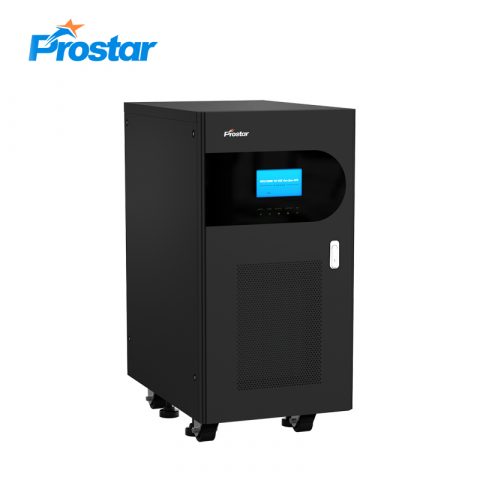
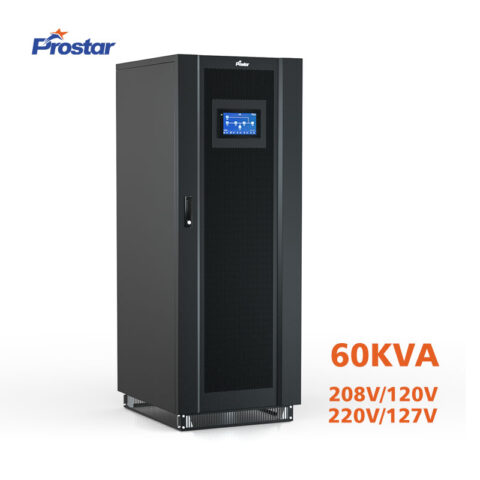
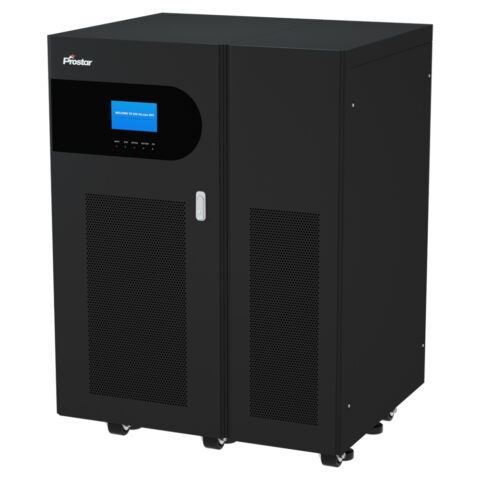
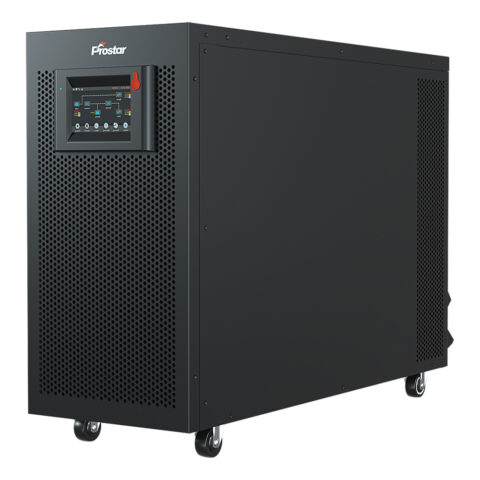
Related Online UPS for Telecom Base Station
Common Mistakes Buyers Should Avoid
Many procurement teams unintentionally increase lifecycle costs by making avoidable mistakes.
Avoid:
- Purchasing based solely on the lowest price
- Ignoring battery replacement costs
- Underestimating future network expansion
- Choosing consumer-grade UPS equipment
- Forgetting remote monitoring capabilities
- Selecting equipment without local technical support
- Ignoring environmental protection ratings
The total cost of ownership (TCO) over 8–10 years is often more important than the initial purchase price.
FAQ
Backup duration depends on the site’s role, utility reliability, and generator start-up time. Urban sites may only require 30–60 minutes, while remote telecom towers often need several hours of autonomy.
Yes. An online UPS for telecom base station delivers continuous double-conversion protection, zero transfer time, and stable output voltage, making it the preferred choice for mission-critical communication infrastructure.
Absolutely. Many modern UPS for Telecom Base Station systems support lithium battery integration through BMS communication protocols, enabling longer battery life, faster charging, and reduced maintenance.
Yes. Hybrid telecom power systems commonly combine solar panels, MPPT charge controllers, lithium batteries, generators, and a UPS for Telecom Base Station to provide reliable off-grid or grid-assisted operation.
Most macro base stations require between 5kVA and 30kVA of backup capacity, depending on the number of carriers, RRU count, and whether 5G equipment is co-located on the site.
Best practice is quarterly load testing combined with continuous remote monitoring, plus a full capacity test annually to catch gradual degradation before it causes an outage.
The Articles You may Like
- Why Every Server Room Needs a Rackmount Uninterruptible Power Supply
- Stand-alone power system – Wikipedia
- What is the CT Sensor in Solar Inverter On Off Grid
- Rack Mount UPS – How to Choose for Servers and Home Network?
- Prostar Power: Delivering Reliable Power Solutions
- How to Choose the Right Computer Uninterruptible Power Supply UPS Capacity