
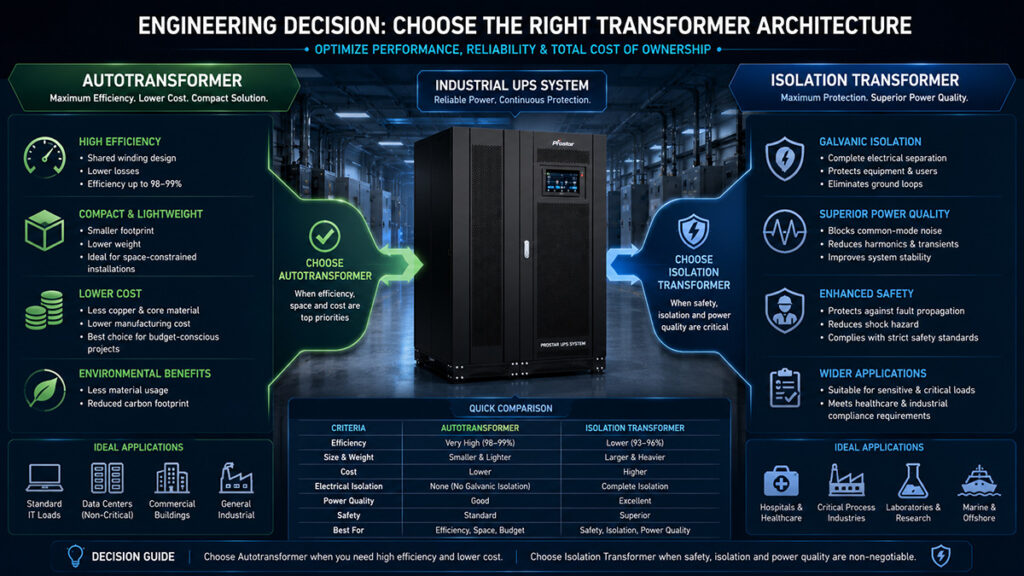
Selecting the proper transformer architecture is one of the most important engineering decisions in industrial UPS design. Many engineers compare autotransformer vs isolation transformer when specifying UPS systems for manufacturing plants, hospitals, data centers, oil & gas facilities, airports, and other mission-critical applications.
When designing an industrial Uninterruptible Power Supply (UPS), the choice between an autotransformer vs. isolation transformer is one of the most consequential engineering decisions you will make. In brief:
- Use an autotransformer when your primary goals are high efficiency, compact form factor, reduced cost, and moderate voltage conversion in non-critical or well-grounded environments.
- Use an isolation transformer when you need galvanic separation, protection against common mode noise, ground fault isolation, or when powering sensitive, mission-critical, or medically adjacent industrial equipment.
What is an Autotransformer?
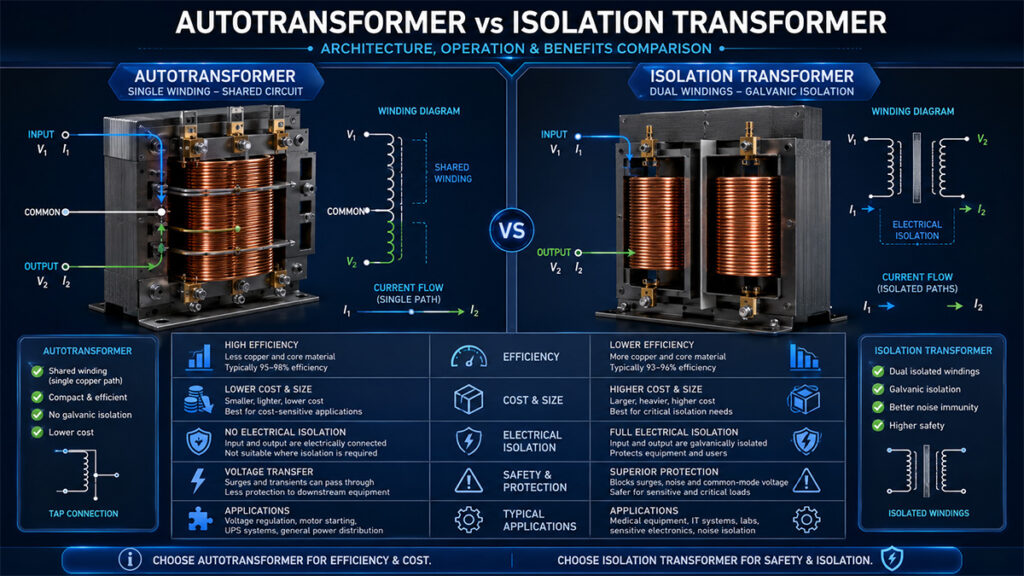
An autotransformer uses a single continuous winding with taps that serve both the primary and secondary circuits.
Unlike conventional transformers, the input and output are electrically connected.
This design offers:
- Higher efficiency
- Smaller physical size
- Lower weight
- Reduced manufacturing cost
- Better voltage regulation for moderate voltage conversion
However, because the primary and secondary windings are connected, there is no galvanic isolation between the power source and the load.
Autotransformers are commonly used for:
- Voltage adjustment
- Utility voltage matching
- Motor starting
- Buck-boost applications
- High-efficiency UPS bypass systems
- Industrial power distribution
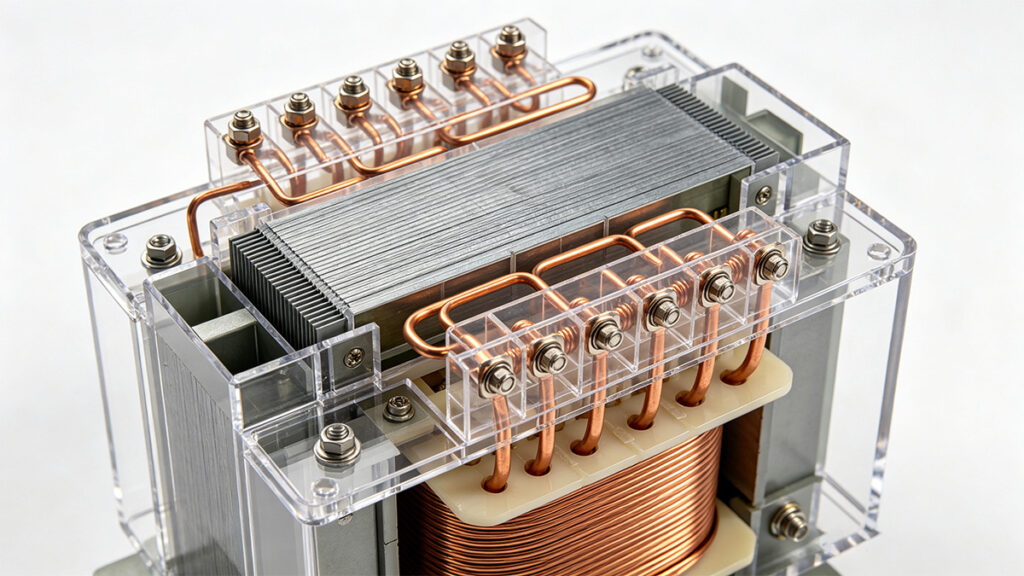
What is an Isolation Transformer?
An isolation transformer uses two completely separate windings.
Energy transfers through magnetic induction rather than direct electrical connection.
The primary and secondary circuits remain electrically isolated, providing significantly improved protection.
Isolation transformers offer:
- Galvanic isolation
- Excellent electrical noise suppression
- Ground loop elimination
- Better common-mode noise rejection
- Enhanced surge protection
- Improved personnel safety
These advantages make them essential in environments where power quality and electrical safety are critical.
How an Autotransformer Works in a UPS
In an industrial UPS, an autotransformer is used primarily for:
- Voltage step-up or step-down between the battery inverter output and the load bus
- Voltage regulation when input voltage deviates from nominal (e.g., compensating for ±15% line variations)
- Impedance matching between inverter output stage and load distribution
Operating Principle
The autotransformer’s single winding is tapped at different points to achieve the desired transformation ratio. The portion of the winding common to both input and output circuits carries the difference current, which is significantly lower than the full load current. This is why autotransformers can be smaller and lighter than equivalent isolation transformers — a substantial portion of the load power is transferred conductively rather than magnetically.
The apparent power advantage of an autotransformer is described by:
kVA_auto = kVA_full × (1 – 1/N)
Where N is the turns ratio. For a 480V → 208V step-down (N ≈ 2.3), an autotransformer only needs to magnetically handle about 56% of the full load power. The remainder passes conductively — making autotransformers extremely efficient at moderate voltage ratios.
Common Autotransformer Configurations in UPS Systems
- Three-phase delta-wye autotransformers used in medium-voltage UPS (10 kVA–500 kVA) for voltage conversion
- Zig-zag autotransformers for creating a neutral conductor on a 3-wire system, enabling ground fault detection
- Tapped autotransformers in static bypass circuits to compensate input voltage fluctuations
- Scott-T autotransformer configurations for 3-phase to 2-phase conversion in specialized industrial drives
How the Isolation Transformer Works in UPS Systems
An isolation transformer in a UPS system serves several distinct functions beyond simple voltage transformation:
- Galvanic separation of the UPS output from the utility ground reference
- Common mode noise rejection to protect sensitive industrial loads
- Ground fault current limiting on the secondary side
- Voltage transformation between standard distribution voltage and load voltage
Operating Principle
The isolation transformer relies entirely on Faraday’s law of electromagnetic induction. Alternating current in the primary winding creates a time-varying magnetic flux in the core, which in turn induces a voltage in the secondary winding. No conductive path exists between primary and secondary. The transformation ratio is determined solely by the turns ratio:
V_secondary / V_primary = N_secondary / N_primary
The complete absence of a conductive link is what creates true electrical isolation. A fault on the secondary side — including a line-to-ground fault — does not automatically create a return path to the utility ground. This prevents the immediate short circuit current that would occur with a directly grounded system, buying time for fault detection systems to isolate the fault safely.
Types of Isolation Transformers Used in Industrial UPS
- Shielded isolation transformers with a Faraday electrostatic shield between windings, dramatically reducing capacitive coupling of high-frequency noise
- K-rated transformers (K-4, K-13, K-20) for harmonic-rich industrial loads
- Ultra-isolation transformers with attenuation ratings exceeding 140 dB for extremely sensitive measurement or medical-adjacent equipment
- Double-wound transformers providing 1:1 voltage ratio for pure isolation purposes
Autotransformer vs. Isolation Transformer: Technical Comparison
| Feature | Autotransformer | Isolation Transformer |
|---|---|---|
| Galvanic isolation | No | Yes |
| Number of Windings | One shared winding | Two separate windings |
| Typical efficiency | 97–99.5% | 95–98.5% |
| Size | Smaller | Larger |
| Weight | Lighter | Heavier |
| Relative cost | Lower (30-50% less) | Higher |
| Common mode noise rejection | Poor without additional filtering | Excellent (especially shielded types) |
| Ground fault behavior | Ground fault immediately returns to utility | Ground fault limited to secondary loop |
| Safety protection | Moderate | Excellent |
| Typical UPS applications | Voltage conversion | Critical power protection |
| Fault current propagation | High risk to secondary side | Trapped on primary side |
| Short circuit current contribution | Higher (direct conductive path) | Limited by transformer impedance |
| Voltage regulation | Good | Good to excellent |
| Harmonic isolation | Limited | Good (with K-rated or shielded design) |
| NEC/regulatory compliance | Permitted in many applications | Required in certain environments (healthcare, hazardous locations) |
When to Choose an Autotransformer for Industrial UPS
The autotransformer wins in a specific and well-defined set of industrial UPS scenarios. Understanding when to use an autotransformer in UPS systems is as important as knowing when not to.
Voltage Mismatch Between UPS and Load Distribution
Many industrial facilities have legacy distribution at 480V (delta, 3-wire) while modern equipment requires 208V/120V (wye, 4-wire). An autotransformer efficiently bridges this gap. Since the source and load share a common ground reference, galvanic isolation is not necessary — and the autotransformer’s lower losses and cost are decisive advantages.
High-Power UPS Systems (500 kVA and Above)
At very large power ratings, the efficiency advantage of autotransformers becomes economically significant. A 0.5% efficiency difference in a 1 MW UPS system operating continuously translates to 5 kW of reduced heat dissipation, thousands of dollars annually in energy savings, and reduced cooling infrastructure costs.
Static Bypass and Maintenance Bypass Circuits
UPS bypass circuits — which must carry full load current while allowing maintenance or fault bypass — frequently use autotransformers for voltage matching between the bypass source and the online UPS output. Speed of transfer and low impedance are priorities here; galvanic isolation is not.
Zig-Zag Configurations for Neutral Derivation
In industrial UPS systems powering 3-phase loads from an ungrounded delta source, a zig-zag autotransformer creates a synthetic neutral and ground reference without full galvanic isolation. This enables ground fault monitoring without the cost of a full isolation transformer.
Space and Weight-Constrained Deployments
In mobile industrial applications — oil field equipment, shipboard UPS, military deployments, and modular substations — the weight and volume reduction of an autotransformer (often 40–60% smaller than an equivalent isolation transformer) can be the determining factor.
When to Choose an Isolation Transformer for Industrial UPS
The isolation transformer for sensitive industrial equipment is the correct choice when the operating environment, load characteristics, or regulatory requirements demand galvanic separation. Here are the primary scenarios:
Sensitive Electronic and Measurement Equipment
Industrial control systems, precision metrology equipment, servo drives with encoder feedback, and high-resolution data acquisition systems are all susceptible to common mode noise — voltage disturbances that appear equally on both conductors relative to ground. An isolation transformer, particularly a shielded type, breaks the common mode noise path between the utility and the load, providing a “clean” power reference at the secondary.
This is arguably the most common reason engineers specify an isolation transformer for common mode noise rejection in industrial UPS — the immunity gained often eliminates entire categories of intermittent faults and spurious equipment resets.
Hazardous Locations
In environments with explosive atmospheres — oil refineries, grain elevators, chemical plants, paint spray booths — a ground fault on the load side of an isolation transformer cannot immediately create a dangerous arc because there is no complete return current path to the source ground. The first ground fault creates no current flow, triggering an insulation monitoring device (IMD) alarm rather than a fault condition. The facility can safely shut down rather than experience an uncontrolled arc in a hazardous area.
This ground fault isolation behavior of isolation transformers is specifically required by NFPA 70 (National Electrical Code) and IEC 60364-7 for certain hazardous location UPS installations.
Patient Care Areas and Healthcare-Adjacent Industrial Facilities
While not strictly industrial, many manufacturing facilities — pharmaceutical production, medical device manufacturing, laboratory environments — are adjacent to healthcare standards and may install isolated power systems (IPS) based on line isolation monitors (LIMs) and isolation transformers. The isolation transformer is the core component of these systems, providing the first-fault-no-trip behavior required for life safety.
Systems With High Ground Leakage Current
Large industrial UPS systems — especially those using long cable runs, variable frequency drives, or EMI filter capacitors — can exhibit substantial ground leakage current. An isolation transformer creates a new local ground reference on the secondary, containing leakage current to the secondary loop rather than allowing it to return on the facility safety ground. This can be critical for meeting leakage current limits in CE-marked equipment and UL 60950/62368 compliance.
Protecting Against Ground Loops and Earth Reference Differences
In distributed industrial systems where UPS units serve loads across a large physical site, differences in earth ground potential between buildings or areas can introduce error voltages in signal circuits shared across the ground reference. An isolation transformer at each distribution point breaks the common reference, eliminating ground loop interference — a persistent problem in factory automation networks.
Electrical Safety and Grounding Considerations
The grounding behavior differences between autotransformers and isolation transformers represent one of the most safety-critical aspects of industrial UPS design.
Autotransformer Grounding Behavior
Because an autotransformer maintains a conductive connection between primary and secondary, the secondary winding is not isolated from the primary ground reference. A ground fault on the secondary (line-to-ground) results in an immediate low-impedance fault current path back to the source, creating potentially very high fault currents. Overcurrent protective devices must be sized to clear these faults quickly.
Critically, if the primary neutral is solidly grounded (as in a 480V/277V wye system), a phase-to-ground fault on the autotransformer secondary will draw fault current referenced to the primary ground — which may be at a different physical location from the load, potentially creating unexpected ground current paths in the facility.
Isolation Transformer Grounding Behavior
With an isolation transformer, the secondary side can be:
- Ungrounded (floating): The secondary has no intentional connection to earth. The first ground fault creates no current flow. An insulation monitoring device detects the fault and alarms before a second fault can create a complete circuit. This is the safest configuration for hazardous locations and isolated power systems.
- Solidly grounded at the secondary neutral: A new, local ground reference is established at the transformer. Fault currents on the secondary return to the secondary neutral locally, not through the facility ground grid. This limits the geographic extent of fault current paths.
- High-resistance grounded: A resistor between the secondary neutral and ground limits the fault current of the first ground fault to a safe level (typically <1A) while allowing full operation to continue. IMDs detect and alarm, and operations can plan a controlled shutdown.
Each of these configurations is specific to the UPS isolation transformer grounding strategy required by the facility’s safety philosophy and applicable electrical codes.
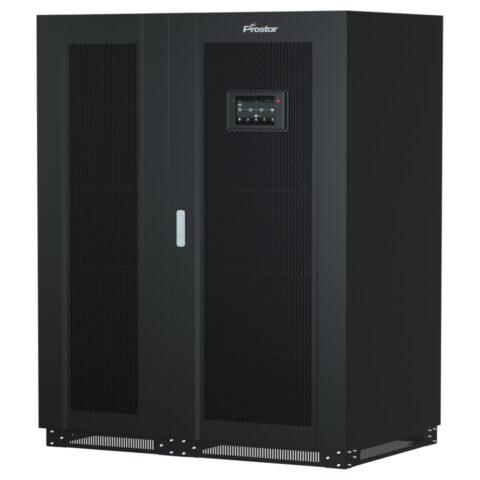
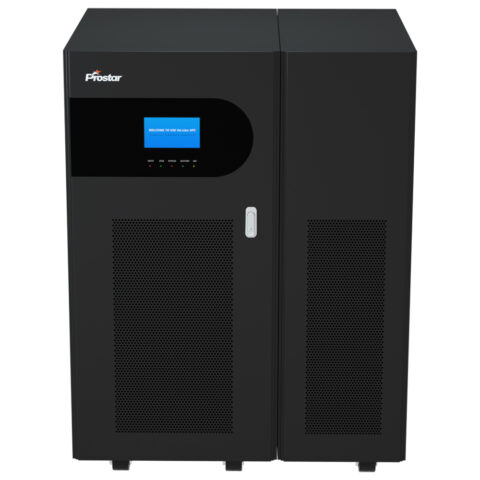
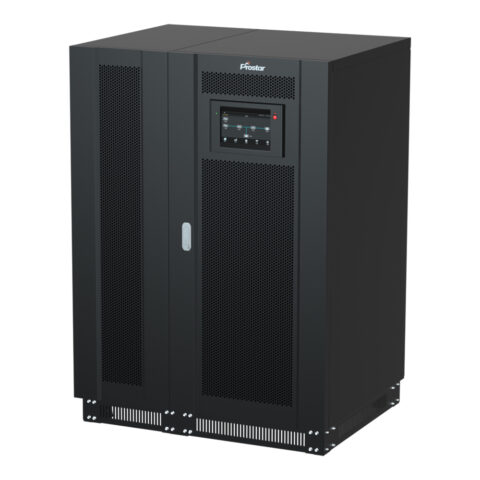
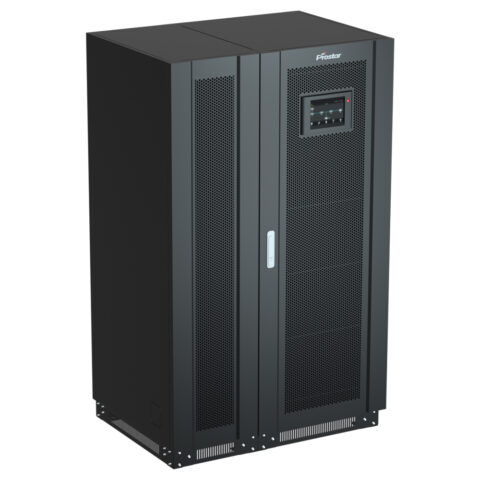
Related Transformer-based Industrial UPS
Common Mode Noise Rejection: Why Isolation Matters
The common mode noise — interference signals that appear simultaneously and in-phase on all conductors relative to a reference ground — is one of the most challenging power quality problems in industrial environments. It is generated by:
- Variable frequency drives and PWM switching converters
- Switching power supplies across the distribution system
- Lightning transient coupling through ground systems
- Radio frequency interference from industrial processes
- Ground current from adjacent equipment sharing a common ground path
Why Autotransformers Fail at Common Mode Rejection
An autotransformer provides essentially zero common mode noise rejection. Because the primary and secondary are conductively connected, any common mode disturbance on the primary travels directly to the secondary. The single winding structure offers no barrier to the noise signal.
Why Isolation Transformers Excel at Common Mode Rejection
An isolation transformer provides differential mode attenuation through its leakage inductance and natural frequency response, but more importantly, it provides common mode rejection because common mode currents cannot flow across the magnetic gap — there is no conductive return path. A voltage disturbance appearing equally on both the L and N conductors relative to ground on the primary side sees an open circuit at the secondary.
A shielded isolation transformer (with a Faraday electrostatic shield between primary and secondary windings, connected to the secondary reference ground) additionally attenuates capacitive coupled high-frequency noise. The interwinding capacitance — which can allow high-frequency current to couple across an unshielded isolation transformer — is diverted to ground by the shield rather than being passed to the secondary load.
The combination of galvanic isolation + Faraday shielding is the gold standard for common mode noise rejection in industrial UPS applications supporting sensitive instrumentation and control systems.
Typical Noise Attenuation Figures
| Transformer Type | Common Mode Rejection (typical) |
|---|---|
| Autotransformer | 0 dB (none) |
| Standard isolation transformer | 40–60 dB |
| Shielded isolation transformer | 80–120 dB |
| Ultra-isolation transformer | 140 dB |
These figures are frequency-dependent and typically measured at 60 Hz–100 kHz. Performance degrades at very high frequencies due to interwinding and winding-to-core capacitances.
FAQ
Not necessarily. Isolation transformers provide superior electrical protection, while autotransformers offer higher efficiency, lower cost, and smaller size. The correct choice depends on your application’s safety, power quality, and budget requirements.
No. An autotransformer cannot provide galvanic isolation because primary and secondary circuits share a common winding conductor. Any claim that an autotransformer provides “partial isolation” refers only to the magnetic path impedance — not true galvanic separation. If isolation is required, an isolation transformer is the only correct solution.
Industrial UPS systems protect mission-critical equipment. Isolation transformers improve electrical safety, suppress noise, isolate ground faults, and enhance overall power quality, making them suitable for demanding industrial environments.
Yes. Because part of the power transfers conductively rather than entirely through magnetic induction, autotransformers typically achieve efficiencies of 98–99%, depending on design and load conditions.
Only to a limited extent. Since there is no galvanic isolation between input and output, autotransformers provide much less attenuation of common-mode noise and ground disturbances than isolation transformers.
A 1:1 isolation transformer provides galvanic separation and common mode noise rejection but does not regulate voltage — the secondary voltage closely tracks the primary. Voltage regulation requires either an additional regulator stage, an autotransformer with tapped connections, or a ferro-resonant (CVT) design. Some isolation transformers include multiple secondary taps for coarse voltage adjustment.
The Articles You may Like
- Why Every Server Room Needs a Rackmount Uninterruptible Power Supply
- Stand-alone power system – Wikipedia
- What is the CT Sensor in Solar Inverter On Off Grid
- Rack Mount UPS – How to Choose for Servers and Home Network?
- Prostar Power: Delivering Reliable Power Solutions
- How to Choose the Right Computer Uninterruptible Power Supply UPS Capacity