
Power reliability is becoming critical in data centers, factories, and energy systems. Therefore, choosing the right UPS architecture is no longer optional. Many buyers struggle to decide between modular UPS vs monolithic UPS due to unclear differences in scalability, cost, and maintenance.
Businesses often encounter two main architectures when selecting a UPS solution for critical applications. These are modular UPS vs monolithic UPS systems. Although both serve the same purpose—protecting equipment from power disturbances—their internal design, scalability, reliability, and maintenance methods are significantly different.

The main difference modular UPS vs monolithic UPS is:
- Modular UPS: Scalable, flexible, supports redundancy (N+1), ideal for growing systems
- Monolithic UPS: Fixed capacity, simpler design, lower upfront cost
If you need future expansion and high reliability, choose modular UPS.
If you need low cost and simple deployment, choose monolithic UPS.
What is a Modular UPS?
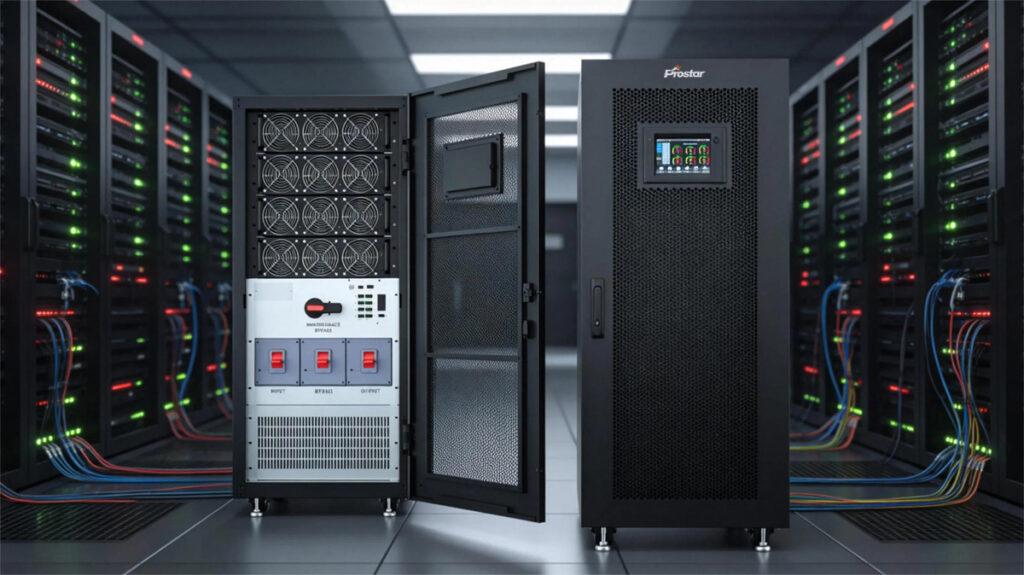
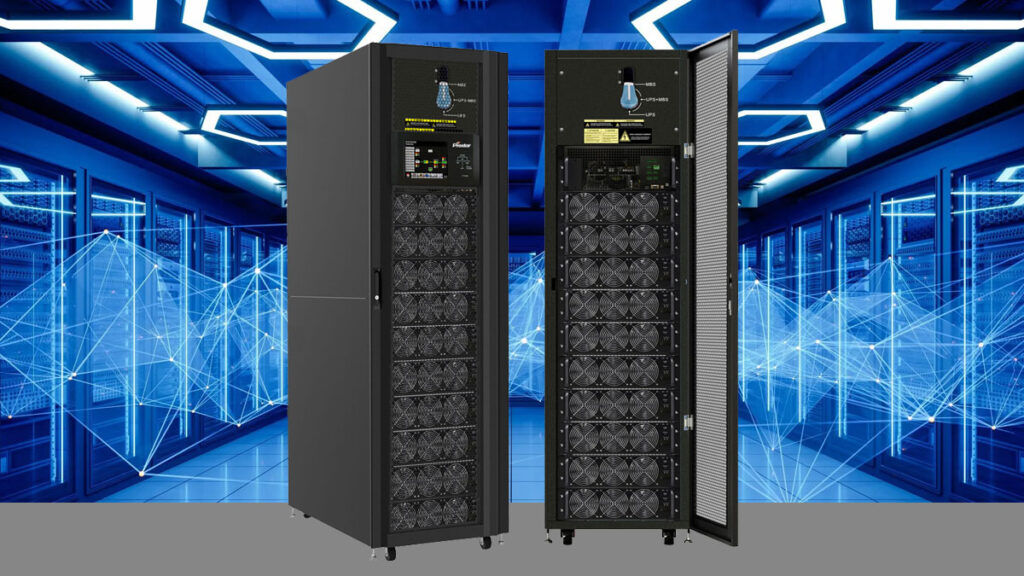
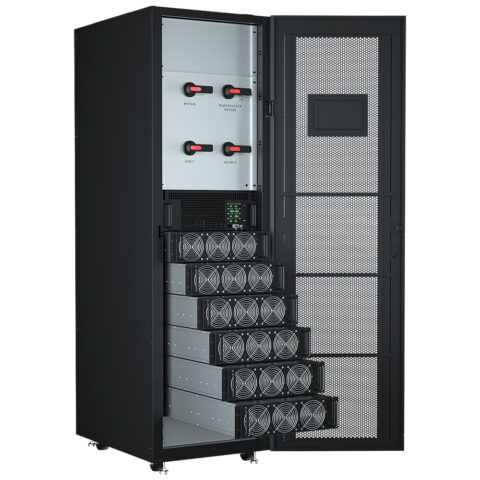
A modular UPS is a power protection system built using multiple independent power modules within a single cabinet. These are installed within a shared cabinet or frame instead of one large power block.
Each module contains its own:
- Rectifier
- Inverter
- Controller
- Power electronics
These modules operate together to provide the total UPS capacity.
Prostar modular designs incorporate N+1 or N+X internal redundancy by default. This means they have one or more extra modules for fault tolerance. They allow failed modules to be replaced without shutting down the system.
The total capacity of the system is determined by the number of modules installed in the frame.
For example, a 200 kVA modular UPS might contain:
- Four 50 kVA power modules
or
If a module fails, it can be replaced without turning the system off. Meanwhile, the remaining modules continue to support the load if there is sufficient redundancy.
This design allows the system to scale easily and maintain higher availability.
The article reference: What is a modular ups
Key Characteristics
- Module-based architecture
- Hot-swappable power modules
- Flexible capacity expansion
- Redundancy capability (N+1, N+X)
- High efficiency
Because of these benefits, modular UPS systems have become increasingly popular in modern data centers and critical infrastructure.
Pros of Modular UPS
Excellent Scalability
One of the biggest advantages of modular UPS systems is scalability.
Capacity can be expanded simply by adding additional power modules without replacing the entire UPS.
For example:
All within the same UPS cabinet.
This makes modular UPS ideal for growing businesses and expanding data centers.
High System Availability
Modular UPS systems support redundancy configurations such as:
- N+1 redundancy
- N+X redundancy
If one module fails, the remaining modules continue supplying power to the load.
This significantly improves system reliability and uptime.
Hot-Swappable Maintenance
Another major advantage is hot-swappable modules.
Technicians can replace or service individual modules without shutting down the entire UPS system.
This reduces maintenance risk and ensures continuous power protection.
Better Efficiency at Partial Load
Traditional UPS systems may operate inefficiently at low loads.
Modular UPS systems can activate only the required number of modules, maintaining optimal efficiency across different load levels.
This results in:
- Lower energy consumption
- Reduced operating costs
- Improved overall efficiency
Compact and Space Efficient
Modular UPS systems are often designed with high power density, allowing more capacity within a smaller footprint.
This is particularly important for:
- Data centers
- Server rooms
- Telecom facilities
Cons of Modular UPS
While modular UPS systems offer many advantages, they also have some drawbacks.
Higher Initial Cost
Modular UPS systems typically have a higher initial investment due to their advanced architecture and redundant components.
However, the long-term operational benefits often offset the higher upfront cost.
More Complex Control System
Because multiple modules operate together, modular UPS systems require sophisticated load sharing and system management.
Modern digital control technologies usually handle this efficiently.
Applications of Modular UPS Systems
Modular UPS solutions are widely used in environments that require high reliability and future scalability.
Typical applications include:
Data Centers
Modern data centers require continuous uptime and the ability to scale power as server capacity grows.
Modular UPS systems are ideal because they allow incremental expansion.
Telecommunications
Telecom networks require reliable power for:
- Base stations
- Network equipment
- Switching systems
Modular UPS systems ensure high availability.
Financial Institutions
Banks and financial trading systems cannot tolerate power interruptions.
Redundant modular UPS systems provide maximum protection.
Hospitals and Medical Facilities
Medical equipment such as MRI scanners, monitoring systems, and laboratory devices require stable and reliable power.
What is a Monolithic UPS?
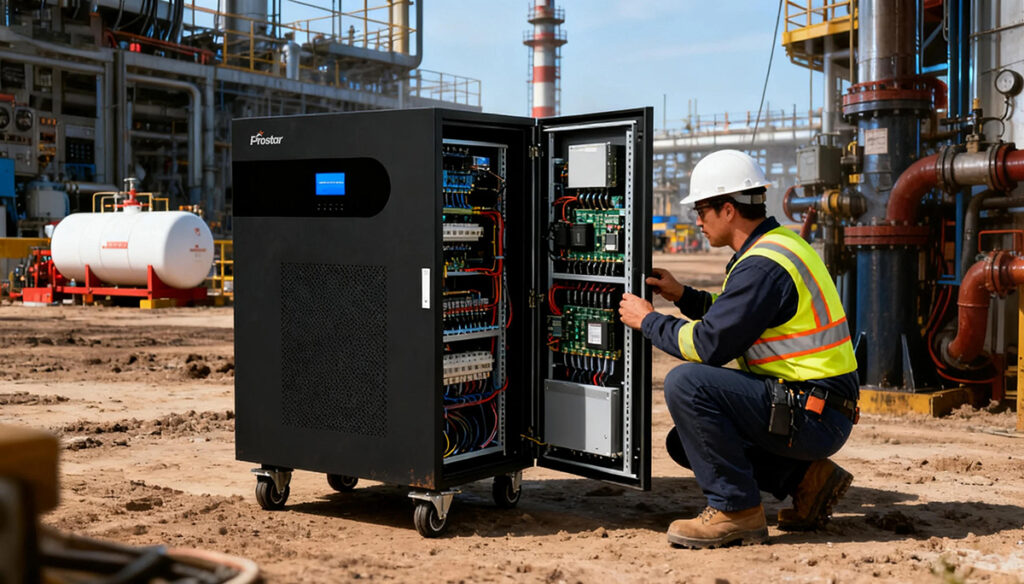
A monolithic UPS is a single, fully integrated unit. All critical components, including rectifier, inverter, static bypass, control logic, and often battery charger, are housed in one fixed enclosure. The system is designed and manufactured with a predetermined power rating (e.g., 200 kVA, 400 kVA).
Capacity expansion usually requires adding entirely new parallel units, and internal redundancy is limited unless multiple complete systems are paralleled.
In this design, the capacity of the UPS is fixed at the time of purchase. If you buy a 200 kVA monolithic UPS, the power protection is capped at 200 kVA. You must replace the entire unit or add another separate unit in parallel to increase the power protection.
Monolithic UPS systems have been widely used for decades and remain common in many industries.
Servicing often requires shutting down the unit. Alternatively, it may involve switching to a maintenance bypass. This can momentarily expose the load to risk if it is not managed perfectly.
Key Features of Monolithic UPS
- Single power module architecture
- Fixed power capacity
- Integrated components within one cabinet
- Typically designed for high-power applications
For example, a 100 kVA monolithic UPS delivers the entire capacity through one internal power path.
Advantages of Monolithic UPS
1. Mature and Proven Technology
Monolithic UPS systems have been used for many years and are considered stable and reliable solutions for many industrial applications.
2. Lower Initial Investment
Compared with modular systems, monolithic UPS systems generally have lower upfront costs, especially for small and medium capacities.
3. Simple System Design
Because the ups system operates as a single unit, installation and configuration are relatively straightforward.
4. Suitable for Stable Power Requirements
If the load capacity is stable and unlikely to increase, monolithic UPS can be a cost-effective solution.
Limitations of Monolithic UPS
Despite their advantages, monolithic UPS systems have several limitations.
Limited Scalability
One of the biggest disadvantages is the lack of flexibility. If power demand increases, expanding capacity can be difficult.
Often, organizations must:
- Replace the entire UPS system
- Install additional UPS units in parallel
Both options can increase cost and complexity.
Maintenance Downtime
Servicing a monolithic UPS may require switching to maintenance bypass or shutting down the ups system.
This can increase operational risk for critical facilities.
Single Point of Failure
Because the UPS operates as one power block, a major failure in the system could potentially affect the entire load.
Efficiency and Energy Costs
Traditionally, efficiency drops significantly when operating at partial loads (e.g., below 40%). Since many facilities are over-provisioned initially, monolithic units often run inefficiently for years.
Footprint and Power Density
Generally larger per kVA, especially when accounting for external battery banks and maintenance clearance.
Applications of Monolithic UPS
Monolithic UPS systems remain widely used in industries where power demand is stable and predictable.
Typical applications include:
- Manufacturing plants
- Industrial automation
- Oil and gas facilities
- Transportation infrastructure
- Small and medium server rooms
These environments may not require frequent capacity expansion.
Comparison Modular UPS vs Monolithic UPS
| Feature | Monolithic UPS | Modular UPS |
|---|---|---|
| Architecture | Single integrated unit | Frame + multiple hot-swappable power modules |
| Scalability | Fixed capacity; expansion via paralleling full units | Pay-as-you-grow; add/remove modules easily |
| Initial Cost | Lower (typically 15–40% less upfront) | Higher |
| Total Cost of Ownership (TCO) | Higher in growing environments | Usually lower over 8–15 years |
| Efficiency (typical) | 94–97% (drops significantly at partial load) | 96–99% ( flatter efficiency curve, better at 30–80% load) |
| Redundancy | Requires full duplicate system for N+1 | Internal N+1 or N+X with only ~10–30% extra capacity |
| Mean Time to Repair (MTTR) | Hours to days (full system outage possible) | Minutes (hot-swap failed module) |
| Footprint | Smaller for same nominal capacity | Slightly larger frame, but often more compact for redundant configs |
| Serviceability | Requires shutdown for most repairs | Live swapping of modules, fewer shutdowns |
| Reliability (MTBF) | High (fewer components) | Very high in practice due to redundancy & standardization |
| Best Suited For | Stable, predictable load; budget-sensitive projects | Growing/dynamic loads; high-availability data centers |
Which One Should You Choose?
The choice between monolithic and modular UPS systems ultimately hinges on your business’s philosophy regarding risk, growth, and capital expenditure.
When to Choose Monolithic UPS
Choose a Monolithic UPS if your power requirements are stable and well-defined. Your budget for initial procurement should be tight. Additionally, have a maintenance team available for scheduled downtime or rapid response to failures. It remains a perfectly viable solution for thousands of applications worldwide.
When to Choose Modular UPS
Choose a Modular UPS if your business is scaling rapidly. Your operations cannot tolerate long repair times. You also prefer to align capital expenses with revenue growth. Achieving N+1 redundancy is easy with modular architecture. It reduces MTTR from hours to minutes. This makes it the gold standard for mission-critical environments. In these settings, every second of downtime translates to financial loss.
As IT infrastructures become more dynamic, the industry is seeing a clear shift toward modular designs. The upfront cost is higher. However, the long-term benefits of agility, serviceability, and high availability often outweigh the initial investment. This is especially true for organizations that depend on continuous operations.
Future Trends in UPS Technology
In modern infrastructure projects, modular UPS systems are rapidly replacing monolithic designs because they:
- Reduce total cost of ownership (TCO)
- Enable incremental investment
- Improve system resilience
This trend is especially strong in:
- Hyperscale data centers
- Smart manufacturing
- Renewable energy storage systems
As a result, modular UPS technology is becoming the preferred solution for modern power protection systems.
Related Modular UPS System
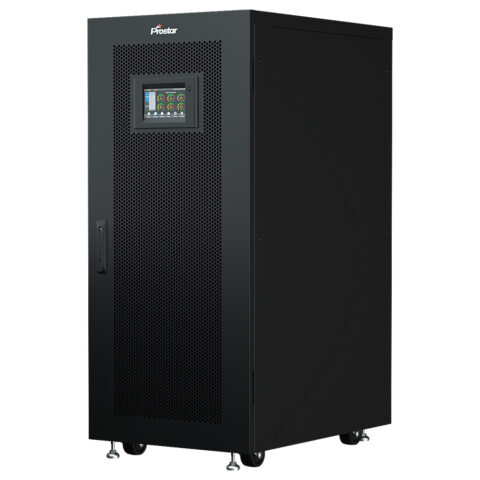
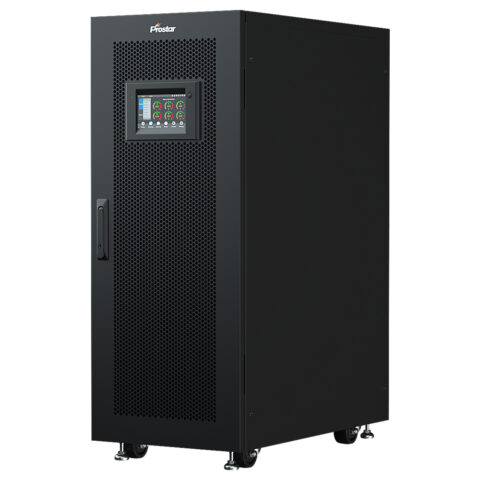
Why Modular UPS Is Dominating in 2026
- AI data centers demand scalable power
- Industrial automation requires zero downtime
- Energy systems need flexible expansion
Modular UPS aligns perfectly with these requirements.
Prostar Solution
For projects requiring high reliability and scalability:
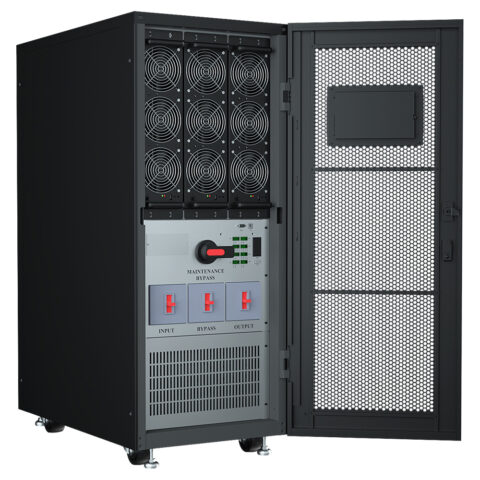
Prostar modular UPS systems offer:
- Hot-swappable power modules
- Scalable architecture up to large capacity systems
- Advanced DSP control technology
- Support for industrial and critical infrastructure
Suitable for:
- Factory backup power
- Industrial automation
- Energy storage systems
Looking for the right UPS solution for your project?
- Get customized system design
- Receive technical consultation
- Optimize your power infrastructure
Contact us now: [email protected]
FAQ
What is the main advantage of modular UPS?
Is modular UPS more expensive?
Can monolithic UPS be upgraded?
Is modular UPS suitable for small businesses?
What is N+1 redundancy in modular UPS?
The Articles You may Like
- Can Off Grid Solar Inverter Charge Controller Run without Battery
- Stand-alone power system – Wikipedia
- What is the CT Sensor in Solar Inverter On Off Grid
- How to Choose Online UPS for Boiler System Backup Power
- Customizable UPS Solutions for Reliable Power Protection
- Choosing the Best Uninterruptible Power Supply UPS for Home Use