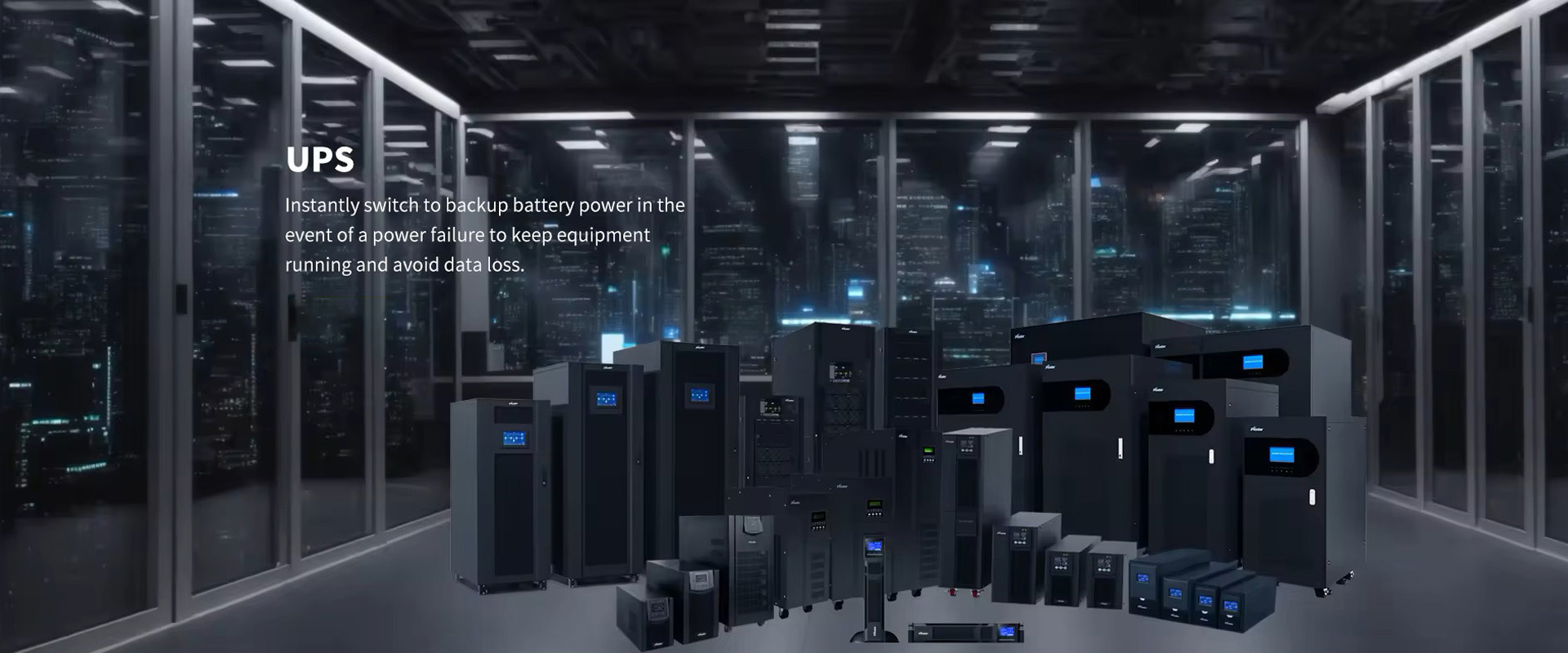
• Prostar ups uninterruptible power supply benefits

Using an Inverter for Emergency Home Backup Power

Using an inverter for emergency backup power is by far the most common use. The Hurricane season is here for those of you in the east and down south. I hope that this blog will help all of you to be more prepared in the likely event that power failure occurs. Here are some helpful tips about running an inverter during a power outage.

Before you purchase an inverter you will want to take a piece of paper and a pen and write down all of the appliances that you feel are necessary to have during a power outage. After you write down all that, you need to go to each one of the appliances and look on the back or bottom for what is called the service tag. This tag will show you a few important specs that help with picking the correct size of the inverter. The first spec that you will most likely come across is the voltage; this will either be 110,115, 120, 220, 230, or 240vac.
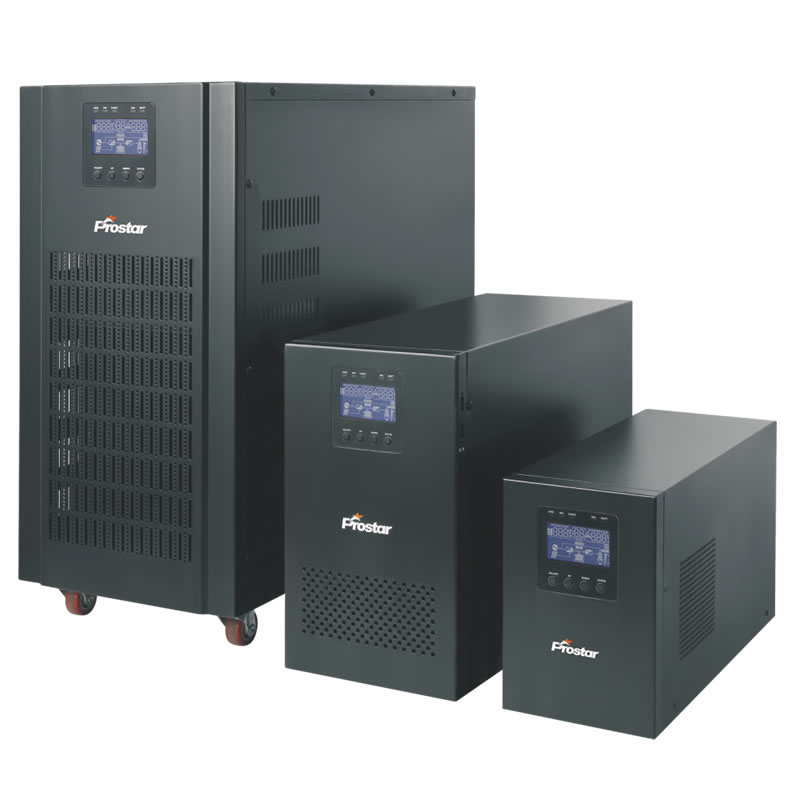
Home Backup Power Inverter

In some cases you may find that the voltage is between 205vac and 240vac. You will need a special inverter to run this appliance.

The next spec you will find will be the Amps. For example this should read like this: 6.0A or 6.0 Amps. What you will do now is take the volts–lets say 115–and multiply by amps 6.0 and this will give you 690 watts. The equation should look like this Volts x Amps = Watts or in this example 115 x 6.0 = 690. Ok, Now that we got that out of the way we can start sizing an inverter that is going to work well during a power outage.

The most common inverter sold for emergency home back-up power is a 1750 watt. The reason for this is that most people want to hook it up to their car, and the 1750 is perfect for most vehicles and will run most appliances. When you hook the inverter up to your vehicle, to run the inverter you will want to try to keep the inverter close to the battery, and out of any weather. I get a lot of calls about why inverters sometimes won’t work when they are hooked to the vehicle this way. Most people hook these up with jumper cables. This is not the best way to do this. Jumper cables do not give a proper connection to the inverter. The best way to hook an inverter up is with a ring terminal that fits properly over the inverter post.

Next we have to cover how the battery will hold a charge. You will want to keep the vehicle running while the inverter is hooked up. This will allow the vehicle’s charging system to keep a charge on the battery while the inverter is in use. If the car is off, the inverter will still work. However, for prolonged use the inverter will work best if the vehicle is running. This just about covers using an inverter for emergencies with a vehicle.

When using an inverter for emergency backup power in a home without a vehicle there are a number of ways to accomplish this. First you can have, say, two 12 volt batteries hooked in parallel, and one inverter. This will give you enough power to run say a refrigerator off and on for two days or so depending on the size of the batteries. If you decide to do this you may want to have at least one back-up battery for the system in case power failure exceeds your battery time.

The next option is for complete home backup. This is the best option, but one of the most expensive. The system will require a large bank of batteries at a higher voltage, say 24 volt or 48 volt. They do make 12 volt systems, but they are less efficient. The best batteries to use in a large bank like this are the 6 volt batteries either made for solar or golf carts. They have a much higher reserve time and are cost effective. The next component is an inverter/charger. These are great for home backup power. They have three key components: an inverter, a charger, and a transfer switch. Inverter-chargers come in sizes ranging from 1500 watts to 5500 watts. The battery chargers that are included range from 70 amps to 150 amps and will charge the input DC voltage of the inverter (12V, 24V, or 48V). This system is a lot more complex than that of a inverter and battery. Most of the inverter/chargers do not have built in AC outlets and require an electrician or professional solar installer to hook them up.

The way that the inverter/charger will work is that the inverter will work when the power is off and the battery charger will charge and maintain the batteries while the power is on. Since the battery charger that is included is a three stage battery charger with smart charging capabilities it is safe to leave the batteries hooked up to this at all times. The internal transfer switch will allow for automatic switching. This means that you will not have to do anything when the power goes out. The inverter/charger will start running all of the appliances you have selected all by itself. Even though the inverter/chargers are more expensive they are much more convenient and you won’t even know that the power went out.

Now that we covered the home backup power without a vehicle, let’s talk about 240vac appliances. Even though there are inverters that will work for this you may want to consider not running them during a power outage because of the large draw from the batteries that they have. If you must run a 240 vac appliance you will want to have a complete separate system from the 110vac inverter system that is running the common household appliances such as the refrigerator or lights.

I hope that this information will help those of you who are faced with hurricanes and other sources of power outages. You can find a great selection of power inverters at www.Prostarsolar.net or www.Prostar-china.com. Any questions or comments would be appreciated.

Also You May Like:

Prostar > About Prostar

Prostar > Professional Team

Prostar > OEM and ODM Service

Prostar > Inverter

Prostar > Prostar Google Drive 

Error: Contact form not found.
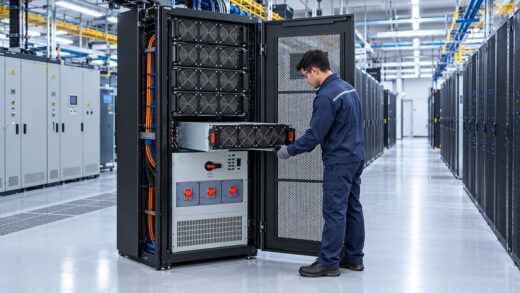
Uninterruptible Power Supply for Healthcare Keeping Critical Operations Running

An uninterruptible power supply for healthcare delivers instantaneous backup power during outages, protecting life-saving equipment, patient data, and critical operations. Medical uninterruptible power supply for critical care prevents downtime in operating rooms, ICUs, and monitoring systems. Reliable uninterruptible power supply for hospital backup power systems also prevents downtime in those same critical areas. Best uninterruptible […]

Choosing the Right UPS for Telecom Base Station Power Backup

Modern telecommunications depend on uninterrupted power. These systems support 4G LTE, 5G networks, microwave transmission, fiber-optic nodes, and remote communication towers. However, every second of downtime is critical. Even a brief interruption can result in dropped connections, lost revenue, and dissatisfied customers. A UPS for telecom base station serves as the first line of defense […]

Industrial UPS Design When to Use an Autotransformer vs. Isolation Transformer

Selecting the proper transformer architecture is one of the most important engineering decisions in industrial UPS design. Many engineers compare autotransformer vs isolation transformer when specifying UPS systems for manufacturing plants, hospitals, data centers, oil & gas facilities, airports, and other mission-critical applications. When designing an industrial Uninterruptible Power Supply (UPS), the choice between an […]

How to Choose the Right Computer Uninterruptible Power Supply UPS Capacity

Choosing the correct computer uninterruptible power supply UPS capacity is not just a technical purchase decision—it is a system reliability engineering problem. Incorrect sizing leads to data loss, hardware stress, and downtime; oversizing leads to unnecessary cost and inefficiency. To choose the right computer uninterruptible power supply UPS capacity, follow these three steps: (1) calculate […]

Prostar Power Delivering Reliable Power Solutions

In an era where every second of downtime translates into lost revenue, damaged reputation, and compromised safety, Prostar Power has positioned itself as a name industries trust. From data centers to manufacturing floors, from commercial buildings to remote solar installations, Prostar Power delivers end-to-end power solutions engineered for reliability, efficiency, and scalability. Prostar Power has emerged as a trusted […]

Why Every Server Room Needs a Rackmount Uninterruptible Power Supply

Walk into any server room, and you’ll see neatly organized racks humming away. What you won’t see is how fragile the entire operation is. A single voltage sag lasting 20 milliseconds can corrupt a database. A brownout can crash an entire rack before anyone notices. A full blackout means data loss, SLA violations, and recovery costs that […]

Why Are More Homes Looking for a Solar and Power Inverter

Most people buy a solar and power inverter without understanding what problem it actually solves. They see a spec sheet, compare prices, and pick the cheapest option. Then they wonder why their system underperforms. The truth is: a solar and power inverter is not a commodity — it’s a problem-solving device. The right solar and power inverter eliminates specific pain points. […]

Benefits of Lithium Battery for UPS Systems

As power infrastructure evolves, more businesses are replacing traditional lead-acid batteries with advanced lithium battery UPS systems. From data centers and hospitals to telecom sites and industrial automation, lithium UPS battery technology is rapidly becoming the preferred solution for high-efficiency, long-life backup power. In a lithium UPS, energy is stored in lithium-based battery packs—either integrated […]

How to Size Modular UPS for Server Room Without Overspending

Server rooms demand reliable, scalable power protection to keep critical IT infrastructure running during outages. Modular UPS systems have become the preferred choice for modern server rooms thanks to their flexibility, built-in redundancy (such as N+1 configurations), and the ability to scale seamlessly as demand grows. This guide explains how to properly size a modular […]

Modular UPS vs Traditional UPS - Which One is Better

Choosing the right uninterruptible power supply (UPS) system is critical for ensuring business continuity, protecting sensitive equipment, and minimizing downtime. Two primary UPS architectures dominate the market: modular UPS vs traditional UPS (monolithic/standalone).  Traditional UPS systems are self-contained, fixed-capacity units. In contrast, Modular UPS systems consist of a frame or rack that houses multiple hot-swappable power modules, which can be added […]

The Role of Industrial UPS for Oil and Gas Refineries

In the high-stakes world of oil and gas refining, processes run 24/7 under extreme conditions. Even a momentary power disruption can lead to catastrophic consequences. Equipment damage, production halts, safety risks, and massive financial losses are all on the line. This is precisely why a robust Industrial UPS for Oil and Gas Refineries is not just an […]

What is Slew Rate in UPS System - A Complete Guide

When selecting a UPS (Uninterruptible Power Supply) for industrial or critical applications, one key parameter is often overlooked. It is the slew rate. Unlike voltage, this parameter specifically refers to how quickly a UPS inverter can change its output frequency. It does this to match the input utility frequency. Proper understanding of slew rate is […]

Modular UPS for Hospitals Reliable Power Backup Solutions

In modern healthcare infrastructure, uninterrupted power is not a convenience—it is a clinical necessity. Hospitals depend on continuous electricity to sustain life-support systems, diagnostic imaging, surgical operations, and digital health records. Even a millisecond-level interruption can lead to data corruption, equipment shutdown, or life-threatening situations. A modular UPS for hospitals is an uninterruptible power supply. […]

Modular UPS System for Data Centers & IT Infrastructure

Modern data centers and IT infrastructures demand uninterrupted power, high scalability, and maximum system uptime. A modular UPS system is designed to meet these needs. It combines flexible architecture with advanced redundancy. Additionally, it features intelligent power management. Whether you are building a new data center or upgrading an existing power system, modular UPS technology […]

12V Lithium Iron Battery vs Lead Acid Which is Better for Your System

The global energy storage market is booming. Solar, RV, marine, and off-grid systems demand more reliable 12V power solutions every year. Many users struggle with selecting between 12V lithium iron battery vs lead acid, unsure about cost, lifespan, and real-world performance. For most modern applications, a 12V lithium iron battery (LiFePO4) is significantly better than […]

Prostar Announces Participation in RENWEX 2026 in Moscow

Prostar is a professional manufacturer of UPS systems, solar inverters, and battery energy storage solutions. The company has over 28 years of experience. Prostar is proud to announce its participation in RENWEX 2026. This event is one of the leading renewable energy exhibitions in Eastern Europe. The event will take place in Moscow, Russia, bringing […]

What is the Difference Between Monolithic UPS vs Modular UPS

Power reliability is becoming critical in data centers, factories, and energy systems. Therefore, choosing the right UPS architecture is no longer optional. Many buyers struggle to decide between modular UPS vs monolithic UPS due to unclear differences in scalability, cost, and maintenance. Businesses often encounter two main architectures when selecting a UPS solution for critical […]

How to Choose Online UPS for Boiler System Backup Power

Choosing online UPS for boiler backup power is an excellent way to maintain home heating during short power outages. This is particularly important for modern gas or oil boilers. They rely on electricity for ignition, controls, circulation pumps, fans, or blowers. A boiler system is a critical component in residential, commercial, and industrial heating applications. […]

Choosing the Best Uninterruptible Power Supply UPS for Home Use

An uninterruptible power supply ups for home use is a device. It provides emergency power to your equipment. This happens when the main electricity supply fails or becomes unstable. It acts as a bridge, giving you enough time to continue working, save your data, or shut devices down safely. A home uninterruptible power supply ups […]

Customizable UPS Solutions for Reliable Power Protection

In modern digital and industrial environments, stable power supply is critical. Customizable UPS solution can provide flexible, industry-specific power protection by adapting to different load requirements, application scenarios, and environmental conditions. Unlike standard UPS systems, a customizable UPS solution ensures higher efficiency, improved reliability, and optimized total cost of ownership. What Is a Customizable UPS […]

Prostar 150x40
Privacy Overview

This website uses cookies so that we can provide you with the best user experience possible. Cookie information is stored in your browser and performs functions such as recognising you when you return to our website and helping our team to understand which sections of the website you find most interesting and useful.