• Prostar ups uninterruptible power supply benefits

What are advantages and disadvantages of solar power

We’re huge advocates for solar energy, but we recognize it isn’t the right solution for everyone. While solar is sustainable and ultimately cheaper than utility power in the long run, it also requires a significant up-front investment and doesn’t work for every property / roof type.

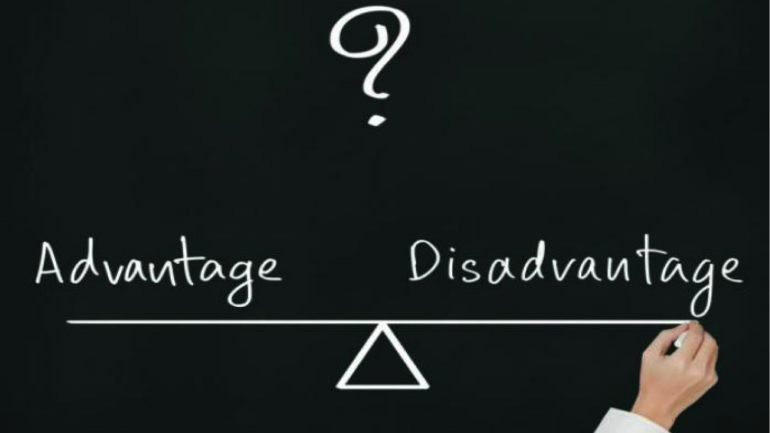
The ultimate question is whether the advantages of solar power outweigh the disadvantages. In this article, we’ll present the pros and cons of solar energy so that you can decide if going solar  power makes sense for you.

Advantages and disadvantages of solar power

Advantages of Solar Power

  • Energy independence
  • Eliminate electric bill
  • Profitable investment
  • Strong government incentives
  • Sustainable
  • Low maintenance
  • Improves property value

Disadvantages of Solar Power

  • Expensive up front
  • Takes up space
  • Energy storage is expensive
  • Not right for every property
  • Makes less sense if you rent

Advantages of Solar Energy

1. Energy independence

Traditionally, most people depend on the utility company to supply them with power. When the grid goes down, going without power for an extended period of time can be a helpless feeling.

If you own a solar power system with energy storage, you can keep generating power during emergencies. That peace of mind is invaluable if you live in a place with an unreliable power grid, or are regularly threatened by severe weather conditions like tornadoes and hurricanes.

Utility power also restricts people who want to live off the grid, like a remote hunting cabin. Solar can generate energy where it would be too expensive to run power lines.

It’s liberating to have complete control over where and how you produce energy. And with electricity costs rising, it also feels great to lock in a fixed rate for your electricity over the next few decades.

2. Eliminate your electric bill

Who doesn’t love one less bill coming out of their paycheck? With a properly sized system, you can drastically reduce or completely eliminate your electric bill.

Even if you extend your payback period by taking out a loan to finance your project, you still enjoy reduced electricity costs from the moment you flip the switch on your PV system.

This is the most exciting part of solar for many people: bringing the system online and watching their power bill disappear.

3. (Grid-tied) solar is a profitable investment

If you buy a grid-tie system (the type of system you build if you have access to power lines), you can expect your investment into solar to turn a profit in the long run.

Assuming the national average for cost of electricity, it would take about 6.08 years to recoup your investment into a $10,000 system. Beyond that point, you start to generate a profit from your system.

In fact, over the 25-year life of the solar panel warranty, we estimate you would earn $31,031 on energy bills after clearing the initial payback period.

4. Lucrative government incentives

The investment into solar becomes even more appealing when you take government incentives into account. State and federal programs are in place to encourage people to invest in renewable energy. Claiming these can put a ton of cash back in your pocket.

The main incentive is the 30% federal tax credit for going solar. Under this program, you are eligible to receive 30% of the total installed cost of your system as a tax credit at the end of the year.

This credit is a dollar-for-dollar reduction of your tax liability. Every dollar in credit is a dollar less that you pay in taxes at the end of the year. So if you buy a $10,000 system and receive a $3,000 credit, you will owe $3,000 less in taxes at the end of the year.

While the federal tax credit is the largest solar incentive, don’t skip out on local incentives, either. Depending on where you live, certain jurisdictions offer local incentives that can be claimed in addition to the federal credit.

5. Sustainability

A sustainable energy source is one that we can use without depleting the source of power. Oil and gas are not sustainable, because we consume those resources as we use them.

In contrast, solar is sustainable because the source of energy (sunlight) is constantly replenished. We can use solar energy without worrying about whether we will deplete the Earth’s natural resources for future generations.

6. Low maintenance

Solar systems don’t have a lot of moving parts. As a result, they rarely break down or require maintenance to keep them running optimally.

Panels are warrantied to last 25 years, but many have a much longer lifespan. (See our article “How Long Do Solar Panels Last?” for a study on the true lifespan of panels.) You rarely, if ever, need to fix or replace panels.

It’s common to replace your inverter at least once over the life of your system, as inverters are typically warrantied for 10-15 years. But that’s about the only scheduled maintenance you will encounter for grid-tied systems.

Off-grid systems are a bit more complex because they must include batteries, which often require routine maintenance. Specifically, flooded lead-acid batteries (the cheapest option available) must be checked and refilled with water regularly to keep them functioning properly.

However, building a grid-tied system eliminates the need for batteries, so most people will rarely need to check in on their system for maintenance or replacements.

7. Improves property value

Studies of the real estate market have proven that homes equipped with a solar power system sell for more than their non-solar counterparts.

In fact, the Lawrence Berkeley National Library conducted research that shows that solar homes fetch an extra $14,329 on average, a 3.74% increase over non-solar homes.

It’s no question that solar power systems substantially increase property value. Home buyers see solar as a major selling point, and they’re willing to pay a premium to move into a solar-powered home.

Disadvantages of Solar Energy

1. It’s expensive to get started

Solar is expensive – at least up front. To build a system that would power the average American home (which uses 897 kWh of electricity every month), you might pay $8,000-$10,000 depending on the products you choose.

That doesn’t include the cost of shipping or installation.

Of course, you’re paying for at least 25 years of energy production up front. In the long term, you break even on the investment and start to make money, but that doesn’t change the fact that not everyone has thousands of dollars in their pocket to get their solar dreams off the ground.

The up-front cost is the main barrier to going solar. Financing options are available, and the payback period is quite favorable even when you take interest into account. However, not everyone wants to be on the hook for loan payments.

2. It takes up a lot of space

Standard solar panels measure 39” wide by either 66” to 72” tall (for 60-cell and 72-cell panels, respectively).

To offset the national average of 897 kWh of electricity per month, you’d need at least 24 panels. In an 8×3 configuration, that system will be 26 feet wide by 44 feet tall. That’s going to take up a lot of room on your roof or in your yard.

Most people opt for a roof mount because it takes advantage of space that would otherwise go unused. If you need to design around odd angles and obstructions, you can always split the panels into sub-arrays, like our customer Luis did when he built his system:

3. Energy storage is expensive.

Batteries are the single most expensive component to a solar power system. Not all systems require batteries, but they become mandatory when you go off the grid. They are also required if you need to supply backup power to your grid-tied property.

(Grid-tied systems don’t automatically provide backup power during outages. That’s a common misconception. For backup power, you need a grid-tie system with energy storage – essentially, a battery designed to work with grid-based systems.)

Expect to pay a lot more money when you add batteries to a system. Battery banks cost at least a few thousand dollars, and if you buy high-end lithium batteries for a full-scale off-grid system, that’s easily a 5 figure investment into the batteries alone.

Furthermore, batteries don’t last as long as the other parts of your system. Lead-acid battery warranties range from 1 to 7 years, meaning you’ll replace them 4 or 5 times before the panel warranty is up.

Lithium batteries justify their high price tag by lasting 10-15 years, but you’re still in for at least one replacement over the life of your system.

4. It’s not right for every property

Not every property is a good fit for solar power.

Some properties are simply too cramped to find any space to build a system. Others are covered in shade and wouldn’t get the sunlight required to generate enough energy.

While there are technologies like shade optimizers and custom racking to mitigate these concerns, they only accomplish so much. If you don’t have anywhere to put your panels, it’s going to be a real challenge to make solar work for your home.

5. It’s better if you own your home (and won’t be moving for a while)

Solar can be a profitable investment, but the payback math assumes you’ll be living in the same property for the full duration of the 25-year warranty.

It takes several years to break even on the initial cost of the system before you start to pocket the savings from your energy bill. Solar makes a lot less sense if you don’t own your home, or have the urge to move within the next few years.

The good news is that because solar increases property values, you are likely to recoup your investment into the system when you go to sell your home. But most people who go solar do it because they want to be self-sufficient and generate their own (less expensive) electricity for the next few decades.

Also You May Like:

Prostar > About Prostar

Prostar > Professional Team

Prostar > OEM and ODM Service

Prostar > Inverter

Prostar > Prostar Google Drive 


Error: Contact form not found.

Industrial UPS Design When to Use an Autotransformer vs. Isolation Transformer

Selecting the proper transformer architecture is one of the most important engineering decisions in industrial UPS design. Many engineers compare autotransformer vs isolation transformer when specifying UPS systems for manufacturing plants, hospitals, data centers, oil & gas facilities, airports, and other mission-critical applications. When designing an industrial Uninterruptible Power Supply (UPS), the choice between an […]

How to Choose the Right Computer Uninterruptible Power Supply UPS Capacity

Choosing the correct computer uninterruptible power supply UPS capacity is not just a technical purchase decision—it is a system reliability engineering problem. Incorrect sizing leads to data loss, hardware stress, and downtime; oversizing leads to unnecessary cost and inefficiency. To choose the right computer uninterruptible power supply UPS capacity, follow these three steps: (1) calculate […]

Prostar Power Delivering Reliable Power Solutions

In an era where every second of downtime translates into lost revenue, damaged reputation, and compromised safety, Prostar Power has positioned itself as a name industries trust. From data centers to manufacturing floors, from commercial buildings to remote solar installations, Prostar Power delivers end-to-end power solutions engineered for reliability, efficiency, and scalability. Prostar Power has emerged as a trusted […]

Why Every Server Room Needs a Rackmount Uninterruptible Power Supply

Walk into any server room, and you’ll see neatly organized racks humming away. What you won’t see is how fragile the entire operation is. A single voltage sag lasting 20 milliseconds can corrupt a database. A brownout can crash an entire rack before anyone notices. A full blackout means data loss, SLA violations, and recovery costs that […]

Why Are More Homes Looking for a Solar and Power Inverter

Most people buy a solar and power inverter without understanding what problem it actually solves. They see a spec sheet, compare prices, and pick the cheapest option. Then they wonder why their system underperforms. The truth is: a solar and power inverter is not a commodity — it’s a problem-solving device. The right solar and power inverter eliminates specific pain points. […]

Benefits of Lithium Battery for UPS Systems

As power infrastructure evolves, more businesses are replacing traditional lead-acid batteries with advanced lithium battery UPS systems. From data centers and hospitals to telecom sites and industrial automation, lithium UPS battery technology is rapidly becoming the preferred solution for high-efficiency, long-life backup power. In a lithium UPS, energy is stored in lithium-based battery packs—either integrated […]

How to Size Modular UPS for Server Room Without Overspending

Server rooms demand reliable, scalable power protection to keep critical IT infrastructure running during outages. Modular UPS systems have become the preferred choice for modern server rooms thanks to their flexibility, built-in redundancy (such as N+1 configurations), and the ability to scale seamlessly as demand grows. This guide explains how to properly size a modular […]

Modular UPS vs Traditional UPS - Which One is Better

Choosing the right uninterruptible power supply (UPS) system is critical for ensuring business continuity, protecting sensitive equipment, and minimizing downtime. Two primary UPS architectures dominate the market: modular UPS vs traditional UPS (monolithic/standalone).  Traditional UPS systems are self-contained, fixed-capacity units. In contrast, Modular UPS systems consist of a frame or rack that houses multiple hot-swappable power modules, which can be added […]

The Role of Industrial UPS for Oil and Gas Refineries

In the high-stakes world of oil and gas refining, processes run 24/7 under extreme conditions. Even a momentary power disruption can lead to catastrophic consequences. Equipment damage, production halts, safety risks, and massive financial losses are all on the line. This is precisely why a robust Industrial UPS for Oil and Gas Refineries is not just an […]

What is Slew Rate in UPS System - A Complete Guide

When selecting a UPS (Uninterruptible Power Supply) for industrial or critical applications, one key parameter is often overlooked. It is the slew rate. Unlike voltage, this parameter specifically refers to how quickly a UPS inverter can change its output frequency. It does this to match the input utility frequency. Proper understanding of slew rate is […]

Modular UPS for Hospitals Reliable Power Backup Solutions

In modern healthcare infrastructure, uninterrupted power is not a convenience—it is a clinical necessity. Hospitals depend on continuous electricity to sustain life-support systems, diagnostic imaging, surgical operations, and digital health records. Even a millisecond-level interruption can lead to data corruption, equipment shutdown, or life-threatening situations. A modular UPS for hospitals is an uninterruptible power supply. […]

Modular UPS System for Data Centers & IT Infrastructure

Modern data centers and IT infrastructures demand uninterrupted power, high scalability, and maximum system uptime. A modular UPS system is designed to meet these needs. It combines flexible architecture with advanced redundancy. Additionally, it features intelligent power management. Whether you are building a new data center or upgrading an existing power system, modular UPS technology […]

12V Lithium Iron Battery vs Lead Acid Which is Better for Your System

The global energy storage market is booming. Solar, RV, marine, and off-grid systems demand more reliable 12V power solutions every year. Many users struggle with selecting between 12V lithium iron battery vs lead acid, unsure about cost, lifespan, and real-world performance. For most modern applications, a 12V lithium iron battery (LiFePO4) is significantly better than […]

Prostar Announces Participation in RENWEX 2026 in Moscow

Prostar is a professional manufacturer of UPS systems, solar inverters, and battery energy storage solutions. The company has over 28 years of experience. Prostar is proud to announce its participation in RENWEX 2026. This event is one of the leading renewable energy exhibitions in Eastern Europe. The event will take place in Moscow, Russia, bringing […]

What is the Difference Between Monolithic UPS vs Modular UPS

Power reliability is becoming critical in data centers, factories, and energy systems. Therefore, choosing the right UPS architecture is no longer optional. Many buyers struggle to decide between modular UPS vs monolithic UPS due to unclear differences in scalability, cost, and maintenance. Businesses often encounter two main architectures when selecting a UPS solution for critical […]

How to Choose Online UPS for Boiler System Backup Power

Choosing online UPS for boiler backup power is an excellent way to maintain home heating during short power outages. This is particularly important for modern gas or oil boilers. They rely on electricity for ignition, controls, circulation pumps, fans, or blowers. A boiler system is a critical component in residential, commercial, and industrial heating applications. […]

Choosing the Best Uninterruptible Power Supply UPS for Home Use

An uninterruptible power supply ups for home use is a device. It provides emergency power to your equipment. This happens when the main electricity supply fails or becomes unstable. It acts as a bridge, giving you enough time to continue working, save your data, or shut devices down safely. A home uninterruptible power supply ups […]

Customizable UPS Solutions for Reliable Power Protection

In modern digital and industrial environments, stable power supply is critical. Customizable UPS solution can provide flexible, industry-specific power protection by adapting to different load requirements, application scenarios, and environmental conditions. Unlike standard UPS systems, a customizable UPS solution ensures higher efficiency, improved reliability, and optimized total cost of ownership. What Is a Customizable UPS […]

DSP Based Industrial UPS for Mission-Critical Loads

Digital Signal Processor DSP based industrial ups systems represent a paradigm shift in industrial power protection technology. Unlike conventional UPS architectures, which rely on analog control circuits and mechanical components, DSP-based systems use real-time digital control. They deliver superior power quality. They also offer faster dynamic response and enhanced operational efficiency. These systems have become […]

How to Choose 3 Phase Online UPS for Laser Cutting Machine

Laser cutting machines—especially fiber laser and CO₂ laser systems—require extremely stable and clean power. This stability is needed to maintain cutting precision, ensure equipment reliability, and guarantee operational safety. Factories demand higher productivity and tighter tolerances. As a result, a 3 phase online UPS for laser cutting has become a standard power-protection solution. The 3-phase […]

Prostar 150x40
Privacy Overview

This website uses cookies so that we can provide you with the best user experience possible. Cookie information is stored in your browser and performs functions such as recognising you when you return to our website and helping our team to understand which sections of the website you find most interesting and useful.